Get the latest price? We will reply as soon as possible (within 12 hours)

  • What’s the electrical insulation of alumina ceramic tubes?
    04-24/2026
    In short, the electrical insulation of alumina ceramic tubes refers to a core function of tubular ceramic products made mainly from high-purity alumina (Al₂O₃) through high-temperature sintering and other processes. Thanks to their unique microscopic structure and material properties, these tubes can effectively block electric current, isolate electric fields, and prevent potential safety hazards such as electric leakage and short circuits, while maintaining stable insulation performance in extreme environments.
  • What’s the minimum order quantity (MOQ) for alumina ceramic tubes?
    04-21/2026
    In the field of industrial ceramic procurement, alumina ceramic tubes feature high temperature resistance, corrosion resistance, high mechanical strength and excellent electrical insulation properties. They are widely used in multiple sectors including semiconductors, medical care, aerospace, scientific research and experiments, industrial furnaces, and instrument temperature measurement.
  • Can I get a free quotation for alumina ceramic tubes?
    04-16/2026
    Alumina ceramic tubes have become core components in the production processes of numerous enterprises by virtue of their excellent properties such as high temperature resistance, corrosion resistance, superior insulation, and outstanding wear resistance and durability.
  • How much does alumina ceramic tube cost in China?
    04-13/2026
    According to market research data, the price of domestic alumina ceramic tubes is clearly stratified, with significant price differences among products of different grades.
  • Can alumina ceramic tubes be used in high temperature furnaces?
    04-10/2026
    For a long time, components inside high-temperature furnaces such as pipelines and furnace tubes have been subjected to multiple severe challenges including extreme high temperatures, thermal shock, and corrosive gas erosion.
  • What is the difference between alumina ceramic and zirconia ceramic tube?
    04-07/2026
    The core differences between alumina ceramic tubes and zirconia ceramic tubes stem from the characteristics of their raw materials, which further extend to multiple dimensions such as physical properties and applicable scenarios, serving as the key to distinguishing their application boundaries.
  • Are alumina ceramic tubes corrosion resistant?
    04-03/2026
    Alumina ceramic tubes are industrial ceramic components manufactured using high-purity alumina as the core raw material through multiple processes such as powder preparation and high-temperature sintering. Relying on the corundum crystal structure of alumina, they exhibit far superior chemical stability compared to conventional metals, laying a fundamental foundation for their excellent corrosion resistance.
  • Who are the reliable alumina ceramic tube manufacturers in China?
    03-30/2026
    As the "industrial armor", alumina ceramic tubes impose extremely stringent requirements on raw material purity, sintering processes and forming technologies in production. Only enterprises with a complete manufacturing system and core proprietary technologies can deliver products that meet the rigorous standards of various industries.
  • What is 95% vs 99% alumina ceramic tube?
    03-26/2026
    In the industry, alumina content purity is generally used as the core classification criterion. 95% and 99% alumina ceramic tubes refer to tubular ceramic products with alumina mass fractions of no less than 95% and 99% respectively. Differences in purity directly determine the physical properties, applicable scenarios and cost performance of the products.
  • What packaging do you use for ceramic tubes?
    03-23/2026
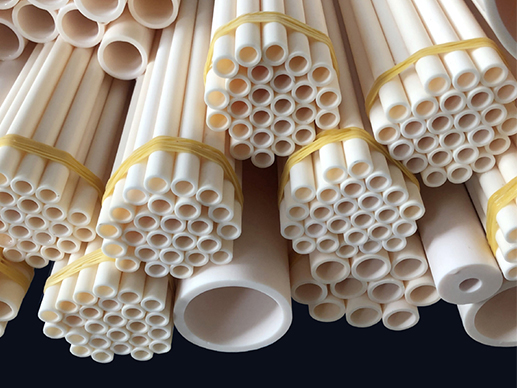
    To ensure the transportation safety of alumina ceramic tubes and avoid breakage risks, Yunxing Industrial Ceramics consistently implements a graded packaging standard based on weight and shape. It precisely matches packaging materials and protection solutions, balancing transportation safety and shipping efficiency, and comprehensively improving the delivery quality of finished products.