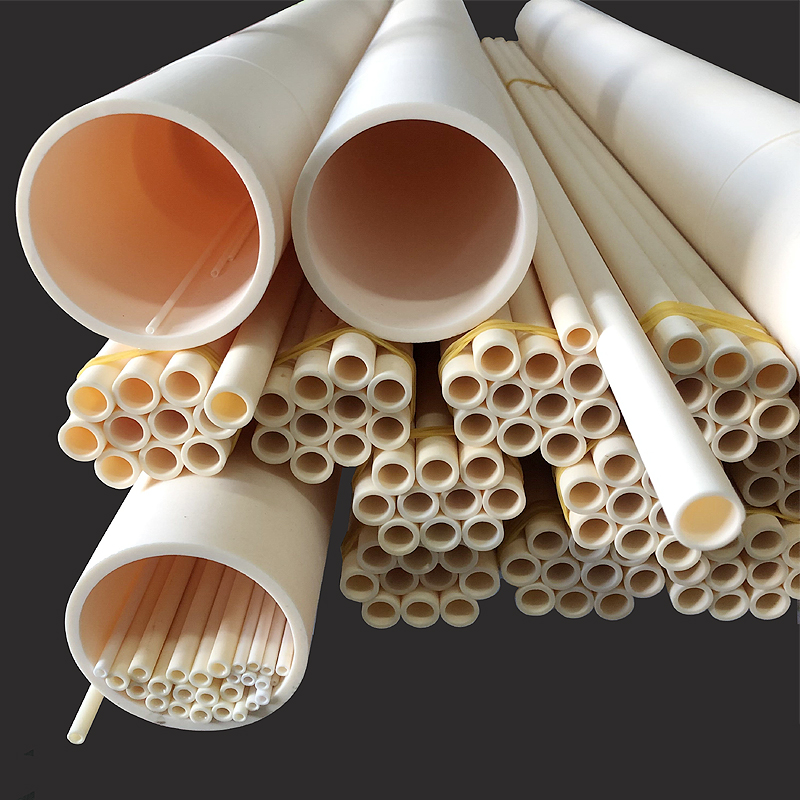
Against the backdrop of industrial manufacturing transitioning toward high-end and refined development, alumina ceramic tubes, as core components for extreme working conditions involving high temperature, corrosion and abrasion, are widely applied in key sectors including semiconductors, new energy, metallurgy and environmental protection. The scientific selection of such tubes directly determines equipment operating efficiency, service life and production costs.
Enterprises shall focus on confirming six core operating condition parameters before model selection, including operating temperature, medium characteristics, system pressure and flow velocity, pipeline layout, service life requirements and special demands, which serve as the foundation for accurate product matching. For instance, integrally sintered pure alumina ceramic tubes shall be adopted for working conditions with high temperature and direct open flame combustion, while ceramic-lined composite tubes are more suitable for large-diameter special-shaped parts, so as to avoid installation hidden dangers caused by mismatched structures.
Besides purity, the matching of specifications and dimensions, structural type and installation method is equally indispensable.
In terms of specification selection, the caliber shall conform to the standards of supporting equipment, while the thickness of the ceramic layer is adjusted according to the wear degree. A thickness of 3–5 mm is recommended for light wear working conditions; for severe wear scenarios such as quartz sand and slurry conveying, 8–12 mm is required. Meanwhile, the thickness should not exceed 1/10 of the pipe diameter to avoid the risk of thermal stress.
In the current market, some enterprises overlook product testing standards and end up purchasing inferior products with substandard purity and unstable performance, resulting in frequent equipment failures. Experts remind that when selecting products, enterprises should request test reports from suppliers and focus on verifying core indicators such as the actual alumina content, bulk density and porosity. Meanwhile, priority should be given to manufacturers with stable mass production capacity, customized service availability and professional installation guidance, so as to avoid losses caused by unstable product batches and inadequate after-sales support.
For enterprises, scientific model selection can not only reduce operation and maintenance costs and improve production efficiency, but also help enterprises gain a competitive edge in industrial upgrading. In the future, with the continuous optimization of material processes, the purity and precision of alumina ceramic tubes will be further improved, and the selection criteria will become more refined and standardized.