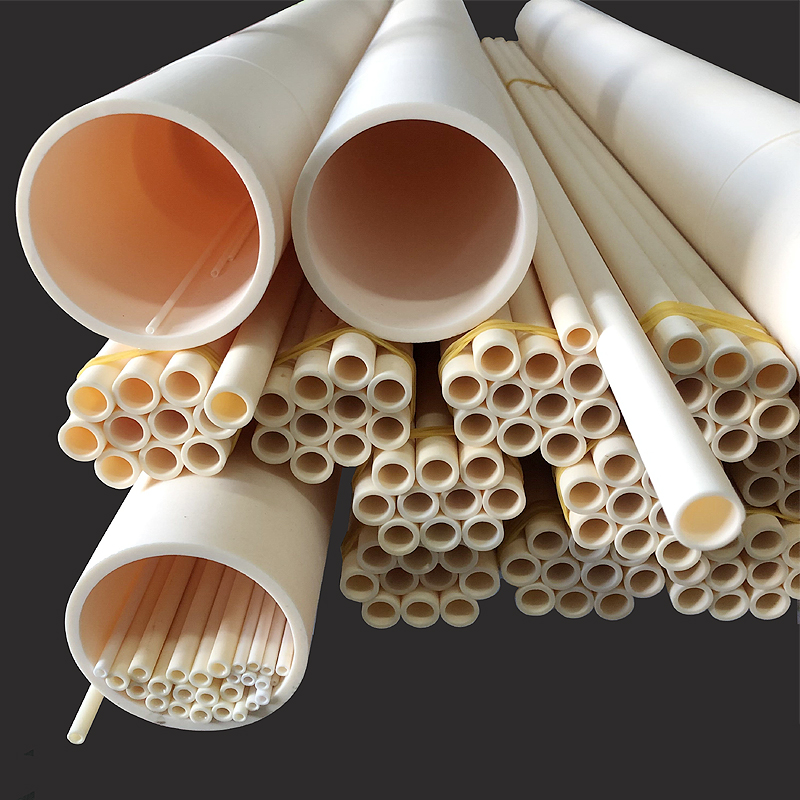
In rigorous high-temperature scenarios such as precision laboratory testing, industrial high-temperature smelting, and semiconductor manufacturing, the high-temperature resistance and structural stability of materials directly determine the efficiency and safety of experiments and production.
With outstanding high-temperature resistance, corrosion resistance and electrical insulation properties, high-purity alumina ceramic tubes have become the preferred material for laboratory and industrial high-temperature applications. They continuously drive the transformation of high-temperature operations across various industries toward high efficiency, energy conservation and safety, and break through the application bottlenecks of traditional materials in extreme environments.
The core advantages of alumina ceramic tubes lie in their excellent high-temperature adaptability, especially the high-purity varieties deliver more outstanding performance. Data shows that alumina ceramic tubes with a purity of 99.3% and above can withstand a maximum service temperature of up to 1800℃, far exceeding the high-temperature resistance limit of most metal materials. At such extreme temperatures, they can still maintain good structural integrity, chemical inertness and electrical insulation. In contrast, traditional metal materials tend to soften, deform and even fail under the same temperature conditions.
In laboratory scenarios, alumina ceramic tubes have become indispensable core components for high-temperature experiments. Whether it is high-temperature sintering and melting tests in the field of materials science, or corrosive reactions and precision detection in chemical laboratories, alumina ceramic tubes can deliver stable support by virtue of their excellent properties. In experimental equipment such as tube furnaces and muffle furnaces, they not only form the core process chamber for high-temperature reactions, but also safely isolate heating elements from experimental samples with good electrical insulation, preventing short-circuit accidents under high temperatures.
In industrial applications, alumina ceramic tubes demonstrate outstanding all-round advantages, being widely used in metallurgy, chemical engineering, electric power, semiconductors, new energy and many other industries, and serving as a key solution to the pain points of high-temperature operation.
In the metallurgical industry, they are applied to high-temperature furnace linings and protective sleeves, resisting erosion and high-temperature scouring from molten metals. In the chemical industry, their excellent corrosion resistance enables them to withstand aggressive media such as strong acids and strong alkalis, making them suitable for the transportation and reaction scenarios of corrosive gases and melts.