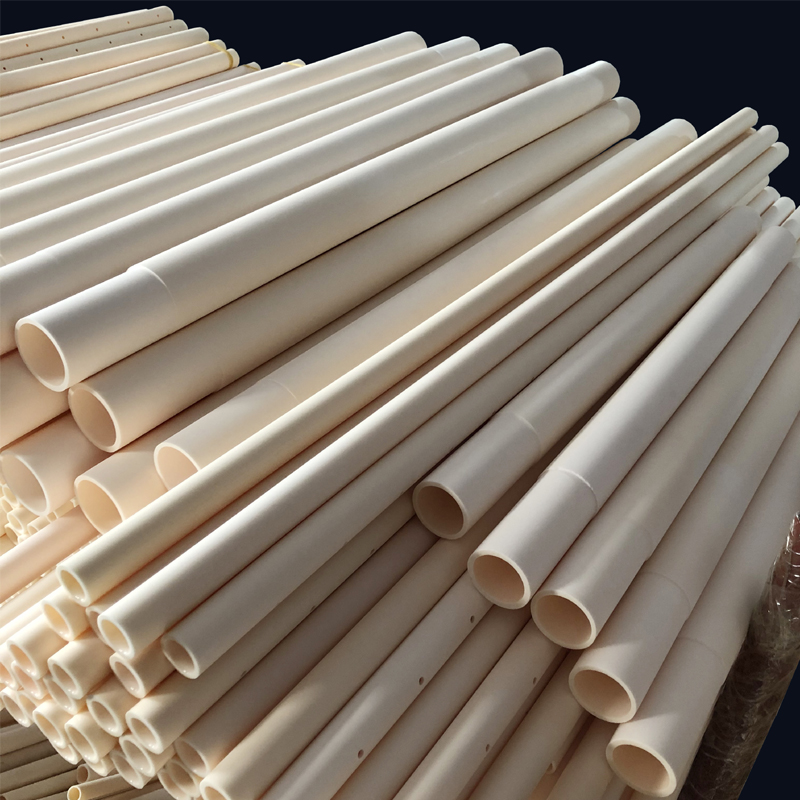
In recent years, with the rapid development and upgrading of the electronics, new energy, semiconductor, and high-end equipment industries, alumina ceramics, as a core insulating and heat-dissipating material, have attracted extensive attention in the industry for their thermal properties. Thermal conductivity directly determines the heat dissipation efficiency and long-term reliability of components, serving as a key indicator for material selection, process optimization, and quality control. This paper systematically explains the range of thermal conductivity of alumina ceramics, its influencing factors, and the national standard testing methods.
Ⅰ、Typical Range of Thermal Conductivity of Alumina Ceramics
The thermal conductivity of alumina ceramics is strongly related to purity, density, grain size and sintering process. The mainstream grades at room temperature (25℃) are as follows:
92% alumina ceramic: approximately 18 W/(m·K)
95%/96% alumina ceramic: 24–28 W/(m·K)
99% high-purity alumina ceramic: 30–35 W/(m·K)
Ultra-high-purity dense ceramic (≥99.9%): up to 35 W/(m·K)
This value is much higher than that of ordinary epoxy substrates (approximately 0.3 W/(m·K)), while maintaining excellent electrical insulation, making it the material of choice for high-power devices, ceramic substrates, thermal pads, and semiconductor components.
Ⅱ、Three Authoritative Testing Methods for Thermal Conductivity (In Accordance with National Standards)
The industry commonly adopts steady-state and transient methods. The testing procedures are standardized with traceable data, meeting the requirements of factory inspection and third-party certification.
1. Laser Flash Method (Mainstream High-Precision Method)
Standard References: GB/T 22588, GB/T 39862-2021
Applicable Samples: High-thermal-conductivity ceramics, thin sheets, substrates
Features: Non-contact, fast testing, high precision, wide temperature range
Principle: The front surface of the sample is heated by a laser pulse, and the temperature rise curve on the back surface is detected by infrared. The thermal diffusivity is calculated, and the thermal conductivity is obtained combined with density and specific heat capacity.
2. Hot Wire Method
Standard References: GB/T 5990-2021
Applicable Samples: Bulk ceramics, refractory ceramics
Features: Mature equipment, fast testing, suitable for batch sampling inspection
3. Steady-State Heat Flow Meter Method / Guarded Hot Plate Method
Standard References: GB/T 10295
Applicable Samples: Medium and low thermal conductivity materials, thick plates, insulating structural parts
Features: Stable data, good repeatability, traditional reference method
Ⅲ、Industrial Value and Application Orientation
Accurate control of thermal conductivity can significantly improve:
Heat dissipation efficiency of power modules, 5G base stations and LEDs
Thermal stability of new energy battery packs and electric drive systems
Reliability and service life of semiconductor cavities and ceramic substrates
By improving purity, densification sintering, and grain optimization, enterprises can stably control the thermal conductivity within the target range, supporting the upgrading of high-end manufacturing.