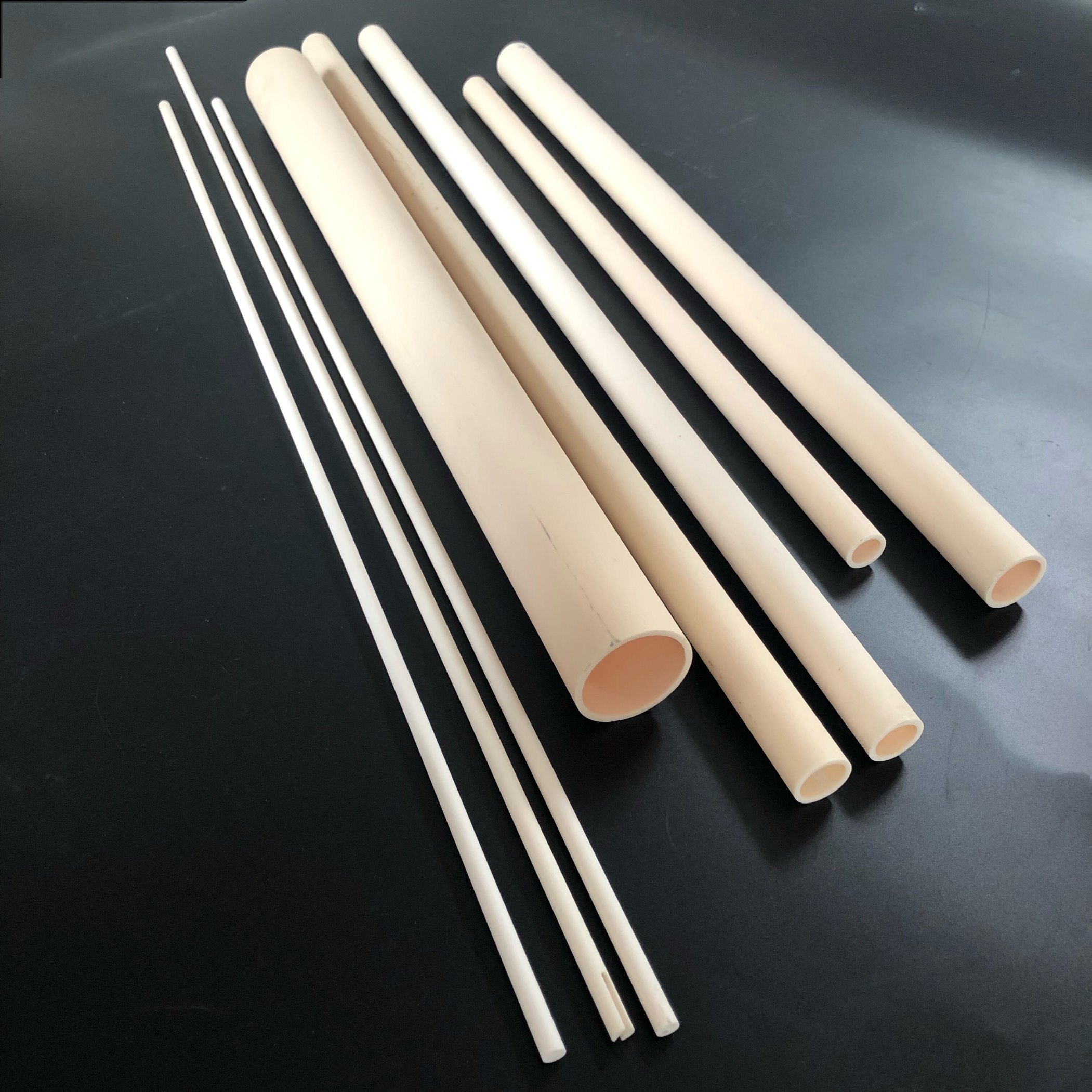
It is reported that the temperature resistance of alumina ceramic tubes is not a fixed value, which mainly depends on the content of aluminum oxide (Al₂O₃). Products with different purity levels have significant differences in maximum temperature resistance. Among them, the 95% high-purity alumina ceramic tube, the most widely used type, features a long-term service temperature of approximately 1600°C. It maintains excellent chemical stability and mechanical strength within this temperature range. Widely applied in basic high-temperature scenarios such as small heating furnaces and high-temperature furnace tubes in the metallurgical industry, it can effectively protect internal heating elements from corrosion and extend the service life of equipment.
After the purity upgrade, the temperature resistance of alumina ceramic tubes has achieved further breakthroughs.
Alumina ceramic tubes with 99% purity feature a long-term temperature resistance of up to 1700°C. Compared with 95% purity products, they deliver significantly improved high-temperature oxidation resistance, thermal shock resistance and mechanical properties. Suitable for harsh working conditions such as high-temperature sintering furnaces in the electronics industry, they provide a stable high-temperature environment for the sintering of precision electronic components and ensure product yield.
High-purity alumina ceramic tubes with a purity of 99.5% and above can withstand a long-term service temperature close to 1800°C, with their short-term temperature resistance exceeding 1800°C. They have become the core preferred material for high-end fields including aerospace and special experimental equipment.
Beyond purity, the actual temperature resistance of alumina ceramic tubes is affected by a variety of factors. According to industry technical experts, the heating rate, heat preservation duration, service atmosphere, and applied stress conditions all exert impacts on its high-temperature resistance.
For instance, in a reducing atmosphere, certain impurities may react with alumina and weaken its temperature resistance capacity. Rapid temperature rise can trigger substantial thermal stress inside the ceramic tube, shortening its service life at high temperatures.
, which effectively prevents cracking, deformation and other defects during high-temperature cycling, and guarantees structural integrity under extreme temperature conditions.