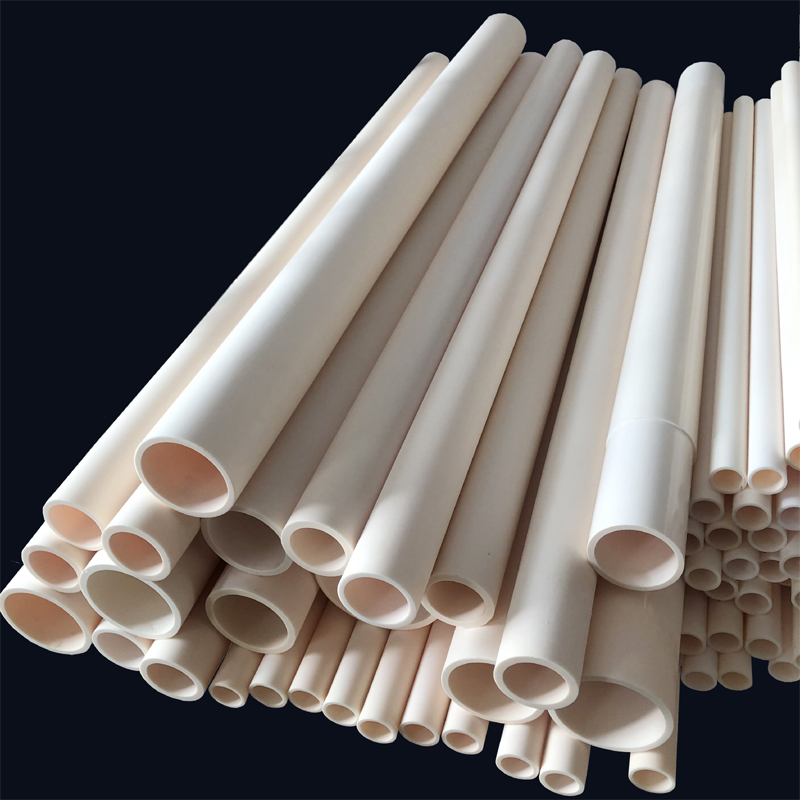
At present, the global manufacturing industry is upgrading towards high-end, energy-efficient and sophisticated development, and the performance requirements of industrial equipment for core components are continuously rising. Alumina industrial ceramics stand out from numerous industrial materials by virtue of their core advantages of high cost performance and diverse adaptability, and are widely used in many core fields such as electronics, machinery, chemical industry, metallurgy and new energy. They have become a key choice for purchasers to reduce production costs, improve equipment stability and enhance product competitiveness. Combining its core characteristics and practical application scenarios, this article analyzes the value of alumina industrial ceramics for purchasers and helps to make procurement decisions accurately and efficiently.
The popularity of alumina industrial ceramics stems from its optimal balance of performance and cost. Compared with special ceramics such as silicon nitride and zirconia, its raw material (bauxite) boasts abundant reserves and lower production costs, while it also features multiple high-performance properties including wear resistance, high temperature resistance, insulation and corrosion resistance. Without high cost input, it can solve the industry pain points of traditional metal and plastic parts that are prone to wear and have a short service life under extreme working conditions, which is also the core reason for it to become the preferred industrial ceramic material for buyers. According to industry data, the global alumina ceramic market scale has exceeded billions of US dollars and is growing at an annual rate of more than 5%. Among them, the demand for high-purity alumina ceramics (such as 99% alumina ceramics) accounts for more than 40%, which has become the core driving force for the technological upgrading of the industry and also confirms its broad procurement and application space.
Following the Property-Application-Cost correlation logic that buyers care about the most, we break down the core properties of alumina industrial ceramics and their corresponding application scenarios one by one, enabling precise matching between procurement requirements and material performance.
High hardness & wear resistance with an extended service life, suitable for wear-intensive working conditions such as machinery, metallurgy and mining, significantly reducing maintenance costs.
High temperature resistance & thermal shock resistance, applicable to high-temperature working conditions, ensuring production continuity.
Excellent insulation performance & stable product properties, ideal for high-end fields like electronics and semiconductors, facilitating product upgrading.
Corrosion resistance & impurity-free, adapted to harsh scenarios including chemical engineering and environmental protection, safeguarding production safety.
Industry experts indicate that with the rapid development of high-end manufacturing sectors such as new energy, semiconductors, and aerospace, the demand for alumina industrial ceramics is upgrading towards high purity, high precision and multi-functionality, and its application scenarios will continue to expand. For purchasers, choosing alumina industrial ceramics is not only selecting a high-performance and cost-effective industrial material, but also an efficient solution to reduce production costs, improve equipment stability and enhance market competitiveness.