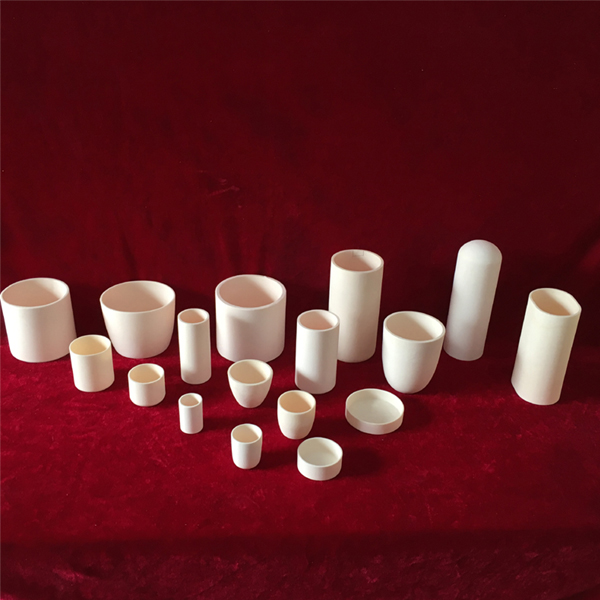
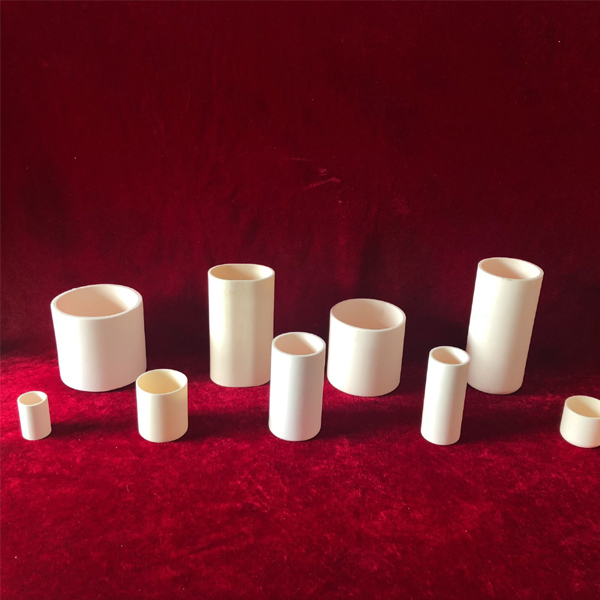
Alumina crucibles are manufactured from high-purity alumina as the core raw material through high-temperature sintering. Featuring a high melting point, strong chemical inertness and excellent thermal stability, they overcome the application limitations of conventional refractory containers and adapt to extreme working conditions across various industries. In the field of high-end manufacturing, their applications are notably characterized by refinement and customization.
At present, the global market for semiconductor-grade alumina crucibles is mainly dominated by Japanese and German enterprises. However, domestic manufacturers are accelerating breakthroughs in technical bottlenecks and gradually increasing their market share.
In the new energy industry, the application scenarios of alumina crucibles continue to expand.
In the photovoltaic sector, they are used in the polycrystalline silicon ingot casting process. Featuring a specially designed microporous structure, these crucibles deliver both thermal insulation and stress buffering, helping to improve the conversion efficiency of photovoltaic cells.
In the lithium battery industry, to meet the sintering requirements of cathode materials such as lithium iron phosphate and high-nickel ternary materials, alumina crucibles boast exceptional resistance to alkali metal corrosion. They effectively prevent crucible spalling from contaminating powders and ensure stable battery performance, making them one of the core consumables for leading enterprises including CATL and LG Energy Solution.
Furthermore, in the Czochralski process for sapphire crystals, alumina crucibles must withstand ultra-high temperatures up to 2,050°C. Through doping modification and surface coating treatments, they meet the cleanliness and stability requirements for crystal growth, supporting the application of sapphire in optoelectronic fields.
In addition to high-end manufacturing, alumina crucibles play an irreplaceable role in traditional industries and scientific research.
In the metallurgical industry, they are widely used for smelting non-ferrous metals such as aluminum and copper. Capable of withstanding temperatures above 1,700°C, they effectively improve metal purity and smelting efficiency.
In chemical analysis and laboratory applications, they are employed for incinerating solid samples, conducting high-temperature reactions, and preparing XRF fused beads, ensuring accurate experimental data and making them essential tools for research in chemistry, pharmaceuticals, materials science, and other fields.
In the aerospace sector, alumina crucibles are used in the preparation of thermal barrier coatings for aero-engine blades. They can endure transient high temperatures of 2,500°C in vacuum environments, demonstrating outstanding structural stability under extreme conditions.
In the medical field, medical-grade alumina crucibles feature strict control over heavy metal leaching, providing a clean sintering environment for bioceramics such as zirconia dental crowns and artificial joints, and complying with the safety standards for medical products.