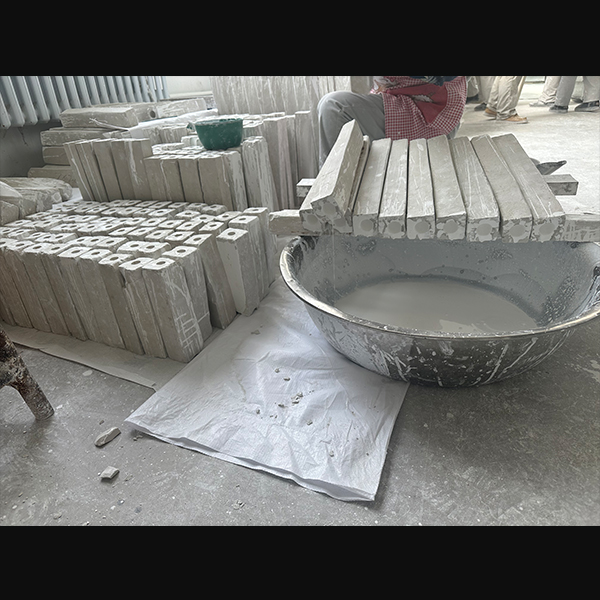
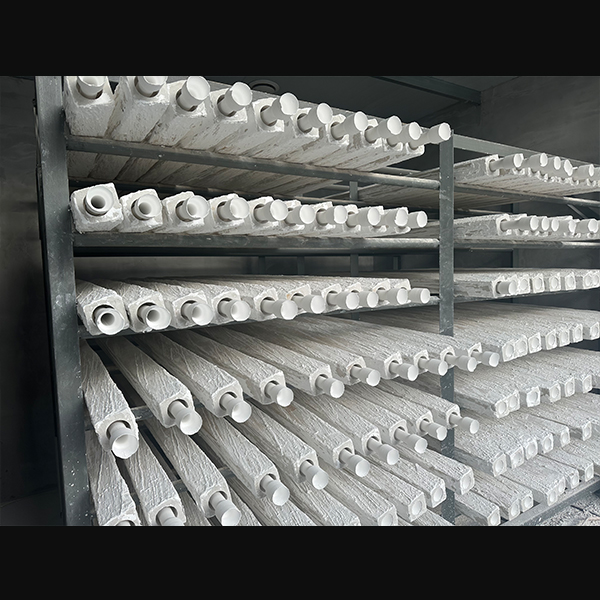
Slip casting molding is actually a molding method that has been used for alumina ceramics for a long time. Because gypsum molds are mainly used, the cost is relatively low and it is also relatively easy to form. Even if the size and shape are complex, it is relatively easy to form.
However, the key to slip casting molding is the manufacturing equipment of alumina slurry. Normally, water is used as the main solvent, and then binders and debonding agents are added, After sufficient grinding, exhaust the gas and then pour it into the gypsum mold. The capillary of the gypsum mold will adsorb water, and the slurry will quickly solidify in the gypsum mold. When conducting hollow grouting, if the mold wall has requirements for the thickness of the adsorbent slurry, the excess slurry needs to be poured out. However, in order to reduce the amount of shrinkage of the blank, We should try to use pulp with higher concentrations as much as possible.
Of course, in the slurry of alumina ceramics, appropriate additives need to be added, mainly to ensure that the particles of the slurry can form a relatively stable suspension on the surface without sinking. In addition, an appropriate amount of other binders such as alginate amine, methyl cellulose, and ethylene glycol, or dispersants such as Arabic gum and polypropylene amine, need to be added, The main purpose is to promote the suitability of the slurry for grouting requirements.
Thanks to its comprehensive advantages in cost, structure and performance, slip-cast alumina ceramics have been widely applied in numerous high-end manufacturing sectors.
In the electronics industry, the highly insulating ceramic substrates and packaging components produced via this process can withstand high-temperature and high-frequency operating conditions, ensuring the stability of electronic equipment. In the mechanical engineering industry, wear-resistant ceramic bearings and seals manufactured through slip casting achieve an ideal balance between complex structures and high strength, with their service life several times longer than that of metal counterparts. In the chemical industry, corrosion-resistant alumina ceramic linings and pipelines can resist the erosion of strong acid and alkali media, replacing metallic materials and reducing equipment maintenance costs.
Industry experts state that with continuous innovations in slurry preparation technology, slip casting is gradually breaking through the bottlenecks of dimensional accuracy and mass production. When combined with modified processes such as vacuum slip casting and pressure slip casting, it is expected to achieve wider applications in high-end sectors including semiconductors and new energy. In the future, this traditional process will continue to iterate technologically to strike a balance between cost and performance, injecting key impetus into the high-end and green development of the alumina ceramic industry.