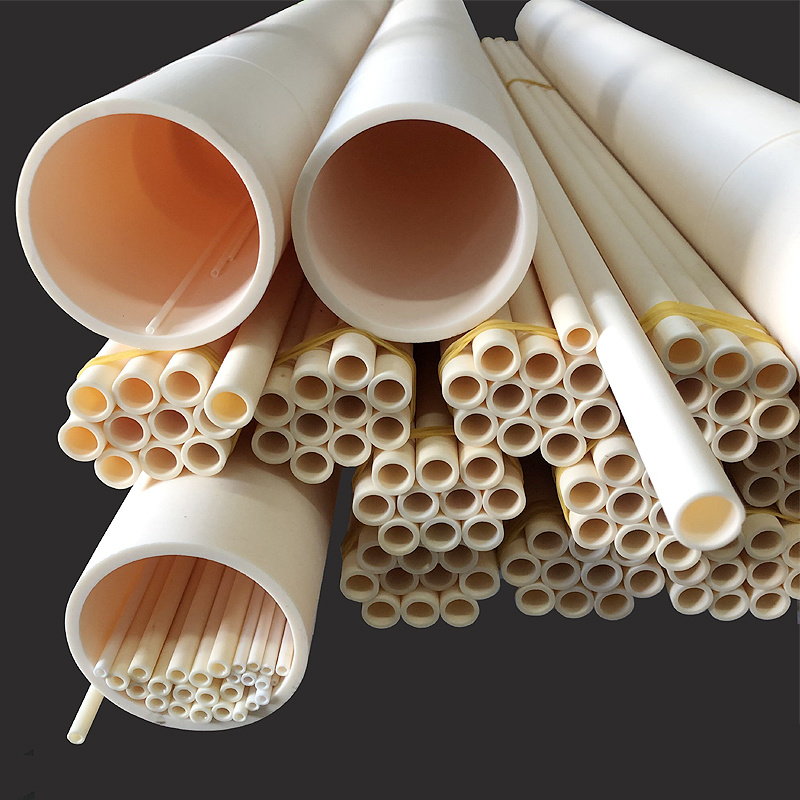
The core advantages of alumina ceramics are reflected in their outstanding physical, chemical and mechanical properties, which constitute their core competitiveness to replace traditional materials such as metals and plastics under extreme working conditions. In terms of mechanical performance, alumina ceramics boast a Mohs hardness of grade 9, second only to diamond and cubic boron nitride, with wear resistance far superior to ordinary metal materials. Products made from it, including pipeline liners, ceramic bearings and seals, are widely applied in wear-resistant scenarios of thermal power, iron and steel, mining and other industries. Their service life is 5 to 10 times that of conventional steel, effectively reducing equipment maintenance costs and shutdown losses.
High temperature resistance and chemical stability are another prominent advantage of alumina ceramics.
Boasting a melting point as high as 2050°C, it can operate stably for a long time at a high temperature of 1600°C without oxidation or melting. Therefore, it is widely used in the manufacturing of high-temperature components such as high-temperature crucibles, refractory furnace tubes, and combustion chamber liners for aero-engines.
Meanwhile, alumina ceramics feature excellent resistance to strong acids, strong alkalis and various organic solvents. In chemical industry scenarios including reactor linings and corrosive medium conveying pipelines, it effectively eliminates potential safety hazards and product contamination caused by material corrosion.
In terms of functional characteristics, alumina ceramics also boast remarkable advantages. They feature excellent electrical insulation properties and can maintain an extremely high resistivity even under high-temperature conditions, making them an ideal material for integrated circuit substrates, high-voltage insulators and power module packaging housings in the electronics industry.
High-purity alumina ceramics achieve high density and transparency through precise process control, making them suitable for high-end optics and semiconductor fields. Regular alumina ceramics (with an alumina content of over 85%) feature outstanding cost performance and are widely used in general industrial components requiring wear and corrosion resistance, forming a complete product system covering high-end, mid-range and entry-level markets.
Although alumina ceramics have outstanding advantages, their inherent shortcomings limit the further expansion of their application scope. High brittleness is their core defect. Due to low toughness, the material is highly prone to cracking and fracturing under impact or external collision. It cannot be widely used in scenarios with dynamic loads or frequent impact, such as high-speed mechanical components and industrial equipment subject to frequent shock. This has become a key bottleneck restricting its large-scale application in the field of high-end equipment.