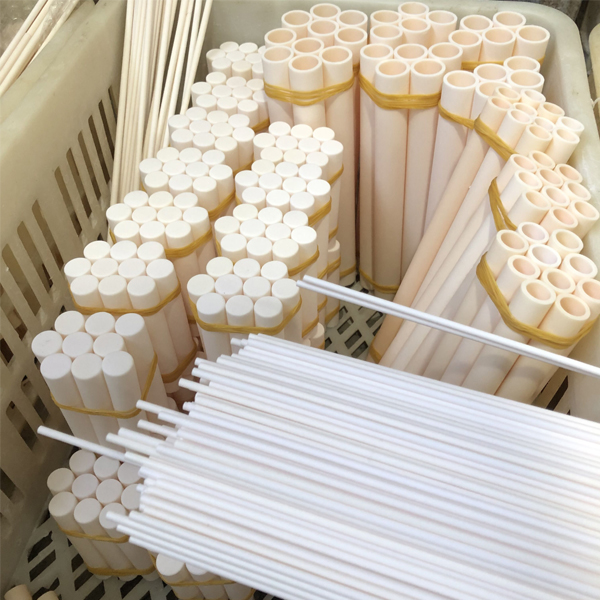
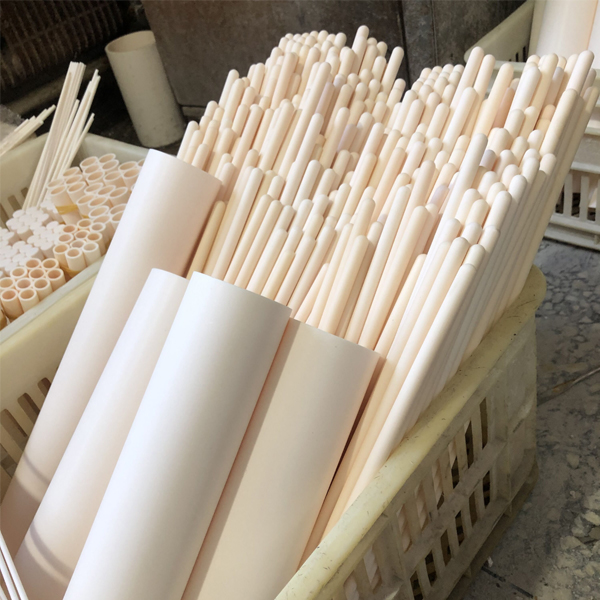
Alumina ceramics are typically classified into multiple grades based on their alumina content, including common types such as 90 alumina ceramic, 95 alumina ceramic, 97 alumina ceramic, 99 alumina ceramic, and high-purity transparent alumina ceramic. Products with different alumina contents vary significantly in their applicable scenarios: alumina ceramic with approximately 95% alumina is mostly used for general structural components and insulating parts; high-alumina ceramics with an alumina content of over 99% are suitable for high-end fields such as electronic packaging and microwave windows; and high-purity alumina ceramic (with an alumina content of ≥99.99%) serves as a key raw material for high-tech products including sapphire single crystals and lithium battery separator coatings.
Among them, the EDTA complexometric titration method, in accordance with the GB/T 6609 standard, titrates aluminum ions through complexation reactions. It is suitable for the accurate testing of high-purity alumina ceramic samples, can effectively avoid impurity interference, and delivers high testing precision.
X-ray Fluorescence Spectrometry (XRF) has become the preferred method for batch testing due to its rapid and non-destructive advantages. It can quickly analyze the content of alumina and impurity elements without damaging samples, with a detection limit of up to 0.01%.
Inductively Coupled Plasma Optical Emission Spectrometry (ICP-OES) features high sensitivity and is capable of detecting trace components in samples. It is applicable to the testing of electronic-grade alumina ceramics with stringent requirements for impurity content, enabling accurate analysis at the ppb level.
In addition to testing with professional instruments, preliminary differentiation of alumina content can also be achieved by comparing national standards and correlating performance parameters. According to national standards such as GB/T 5593-1985 and GB/T 14619-2013, alumina ceramics with different alumina contents exhibit distinct differences in physical properties including bulk density, flexural strength, and apparent porosity:
99 alumina ceramic requires a bulk density greater than 3.70 g/cm³, flexural strength no less than 300 MPa, and apparent porosity below 1%.
99.5% transparent alumina ceramic has a higher bulk density (above 3.75 g/cm³) and lower dielectric constant, making it suitable for high-end applications such as integrated circuit substrates.
In contrast, porous alumina ceramic has an apparent porosity as high as 15–30% with relatively low alumina content, and is mainly used in filtration, catalyst supports and other fields.
Industry experts warn that some enterprises on the market currently falsely label the alumina content of their products, which is difficult to distinguish by visual inspection alone. A comprehensive judgment must be made by combining professional testing and standard comparisons.
For manufacturers, a sound quality control system should be established, and standard testing methods should be adopted for pre-delivery product inspection. For buyers, testing should be conducted through third-party laboratories accredited with CMA and CNAS qualifications to avoid product failure caused by non-compliant content.