With the rapid development of China's high-end manufacturing industry, the application scenarios of alumina ceramic crucibles continue to expand. They have extended from traditional metallurgy to high-end fields such as 12-inch semiconductor wafer manufacturing and sapphire crystal growth. Their standardized use is crucial to the safety and accuracy of experiments and production.
The use of alumina ceramic crucibles must follow the full-process standard of pre-treatment – standardized operation – cooling – cleaning and maintenance, with strict operational requirements for each step.
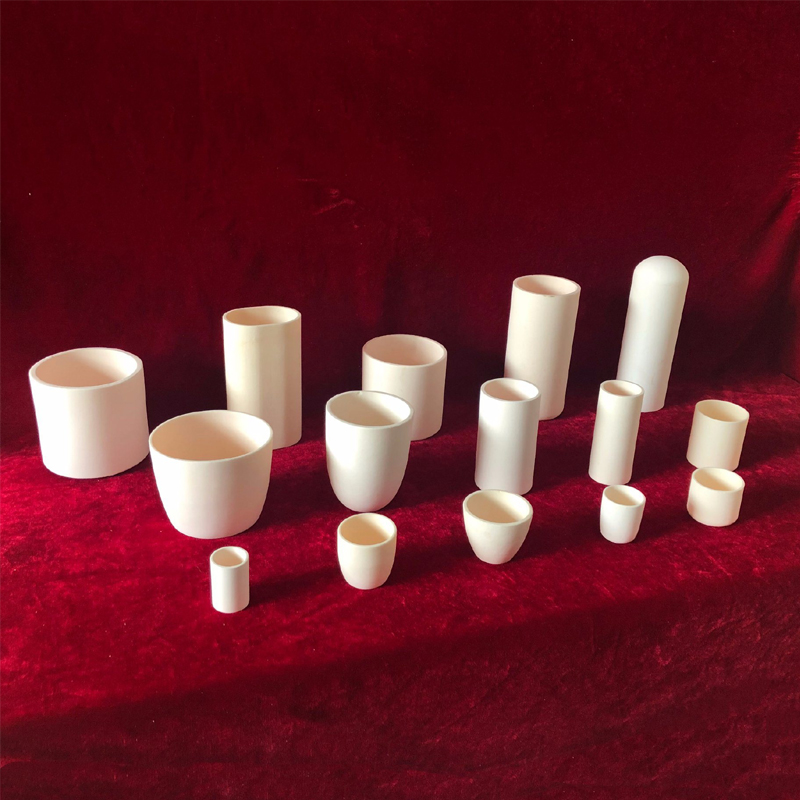
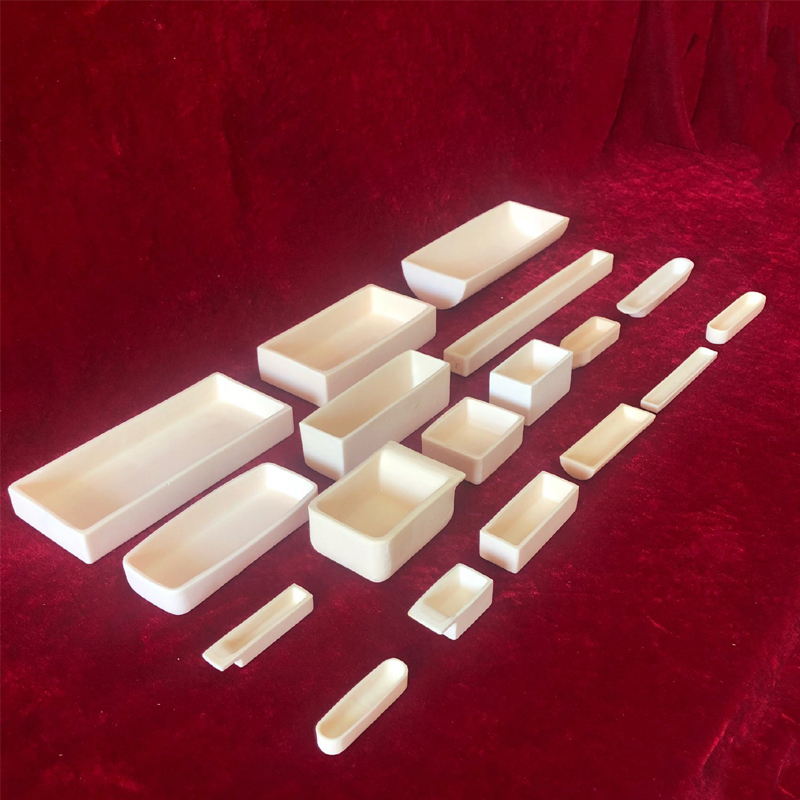
Before use, select crucibles of appropriate size and type according to experimental or production needs: small crucibles are suitable for small samples, large crucibles for large-volume samples or industrial sintering, and round-bottom or flat-bottom crucibles can be flexibly chosen based on operating scenarios.
Meanwhile, new crucibles require cleaning and pre-treatment. After washing with a mild detergent and drying, they should be heated at a low temperature in a furnace to remove impurities and moisture, preventing cracking caused by thermal stress in subsequent use. Additionally, the inner wall of the crucible must be inspected for defects such as cracks and pores before use to eliminate potential safety hazards at the source.
During core operation steps, when loading samples, ensure even distribution of the sample and that the loading volume does not exceed half of the crucible capacity. This prevents the sample from expanding and overflowing during heating, which could corrode the crucible or cause safety incidents.
During the heating process, control the heating rate, which is recommended not to exceed 5℃ per minute, to avoid severe thermal stress caused by sudden temperature changes. Meanwhile, place the crucible in the center of the furnace body and away from the furnace wall to prevent softening and deformation due to local overheating.
In addition, use crucible tongs for handling during operation. Scratching the crucible surface with sharp metal objects is strictly prohibited to avoid damaging its structural stability.
It should be noted that alumina ceramic crucibles of different purities differ in their application scenarios and temperature limits. Crucibles with 99% purity can withstand a short‑term operating temperature of up to 1800℃, making them suitable for high‑temperature solid‑phase reactions, precious metal smelting and other applications. Crucibles with 85% purity are more suitable for long‑term use under mild temperature changes, with a maximum short‑term operating temperature of 1400℃.
Meanwhile, crucibles must avoid contact with corrosive substances such as hydrofluoric acid and strong alkalis to prevent erosion and damage, which could compromise operational safety and precision.