Alumina ceramics have long occupied the position of a core material in fields such as machinery, electronics, chemicals, and aerospace, thanks to their advantages in high hardness, wear resistance, corrosion resistance, and high-temperature resistance. However, their inherent brittleness has always restricted their application expansion in dynamic load and high-end precision scenarios. Today, with multiple breakthroughs in raw material optimization, process innovation, and toughening technologies, this pain point is being gradually overcome, providing downstream purchasers with material options that are more reliable and adaptable.
Multi dimensional technology collaboration leads to traceable performance improvement
Enhancing the mechanical properties of 99% alumina ceramics is not achieved through optimization of a single step, but rather through a full-chain upgrade spanning raw materials, forming, sintering, and post-processing. Technological breakthroughs in each stage deliver clear performance improvements for buyers.
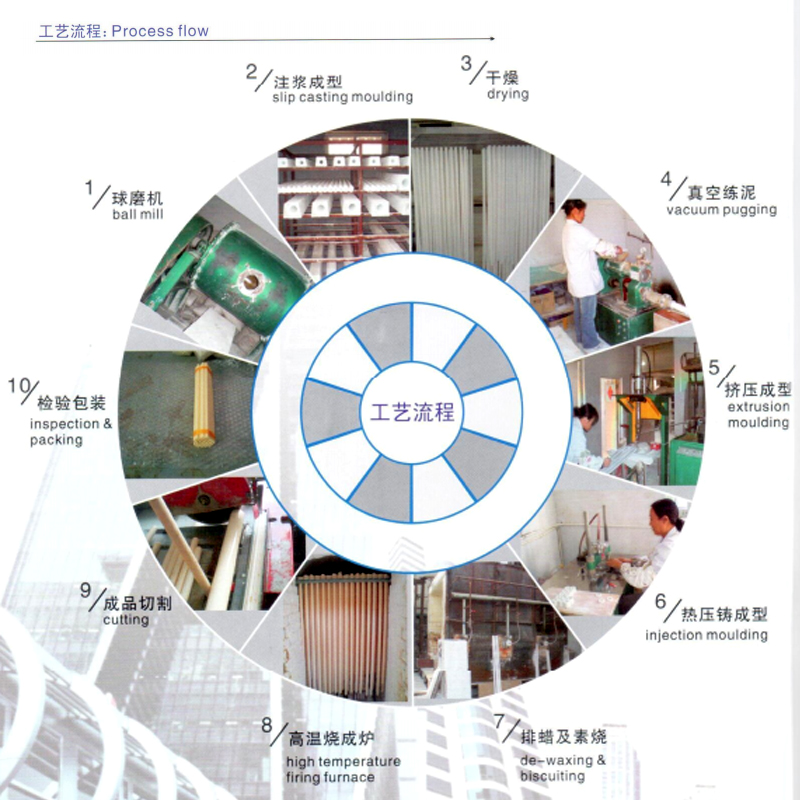
Raw materials and molding: Building a solid foundation of performance
The quality of raw materials directly determines the performance of the ceramic matrix. The current mainstream solution adopts high‑purity α‑Al₂O₃ powder with a purity of over 99%, combined with ultra‑fine grinding technology to obtain powder with a particle size of 0.3–0.8 μm and uniform distribution. This can increase the initial green density by 15%, laying a solid foundation for balancing hardness and toughness.
The precise selection of the forming process is equally critical. For high‑precision and complex‑shaped components, cold isostatic pressing (at 200–300 MPa) can significantly eliminate density gradients, reducing sintering deformation from 3% to within 0.5%. For conventional dry pressing, controlling the pressure between 80–150 MPa and the binder content at 2–5 wt% ensures green body strength and uniformity, thereby lowering losses in subsequent processes.
Sintering and toughening: key breakthrough in core performance
Sintering is the core process for regulating microstructure and unlocking performance potential. Hot pressing sintering technology, by applying a uniaxial pressure of 20–40 MPa, can lower the sintering temperature by 100–150°C, inhibit excessive grain growth, and achieve a ceramic density of 3.98 g/cm³ (over 99.5% of theoretical density), with grain size controlled within 2 μm. Experimental data show that optimizing the sintering profile (holding at 1600°C for 2 hours) improves flexural strength by 15% compared to samples held for 6 hours, avoiding performance degradation caused by grain coarsening.
Performance upgrades broaden application boundaries, future trends worth paying attention to
Technology upgrades and the resulting performance breakthroughs are steadily expanding the application scenarios for 99% alumina ceramics. The optimized material now maintains a flexural strength of over 400 MPa, with some processes achieving 500–600 MPa, while fracture toughness has increased by more than 40%. This enables it to meet the high-load requirements of mechanical seals and wear‑resistant components, while also satisfying the stringent demands of high‑end applications in aerospace, biomedical engineering, and other advanced fields.
Industry experts say that with the continuous iteration of technology, 99% alumina ceramics will break through existing performance bottlenecks and play a core role in more high-end manufacturing fields, providing solid material support for downstream industry upgrading.