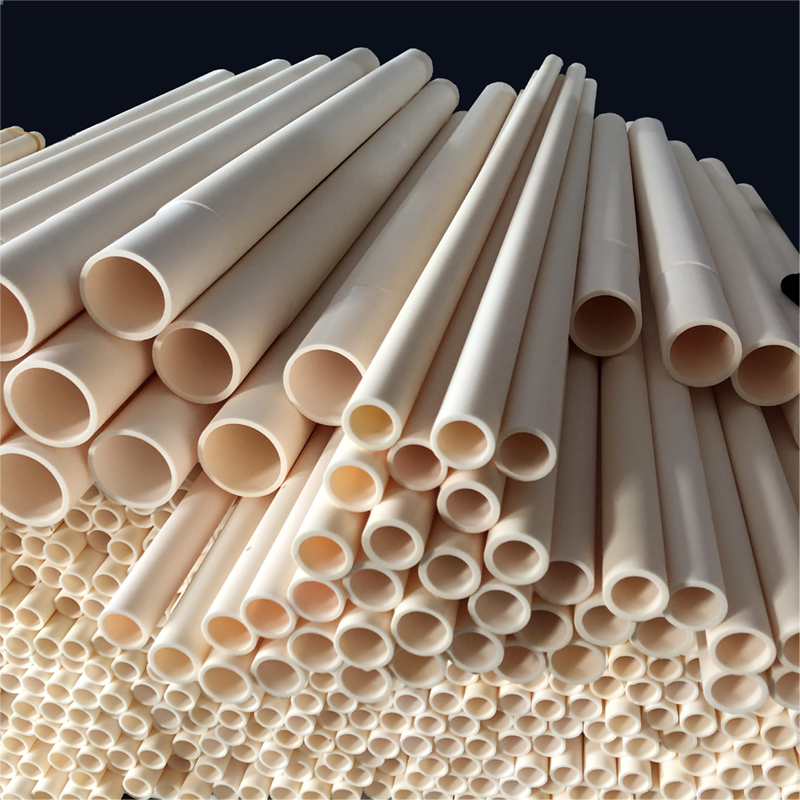
As the most widely used core material in the field of advanced ceramics, the performance of alumina industrial ceramics directly determines the product quality and technical ceiling of multiple industries such as high-end manufacturing, new energy, and semiconductors. Among them, density and strength, as two core physical and chemical indicators, are not only the key benchmarks for measuring the compactness, wear resistance and structural stability of materials, but also serve as an important breakthrough for driving technological innovation in the industry and breaking down barriers in the international high-end market. Recently, combining national industrial standards with the enterprise's latest technological practices, the core achievements of alumina industrial ceramics in the precise regulation of density and the improvement of strength performance have been officially unveiled, injecting new impetus into the high-quality development of China's advanced ceramics industry.
The core value of the density of alumina industrial ceramics lies in "densification-enabled performance", and its numerical range is closely related to material purity, preparation processes and additive ratios. The density differences of products with different grades directly determine the subdivision of their application scenarios. According to the standard data released by the National Quality Inspection and Testing Center for Abrasives and Grinding Tools, China's national standard for alumina ceramics (GB5593-1985) clearly defines the density benchmarks for different types of products: the bulk density of 99% alumina ceramics (Grade A-99) shall be greater than 3.70g/cm³, the bulk density of transparent ceramics (Grade A-99.5) shall not be less than 3.75g/cm³, while porous alumina ceramics have their density controlled within the range of 2.0~2.5g/cm³ by deliberately regulating the apparent porosity, so as to meet the special functional requirements such as filtration and permeation.
Complementary to density, strength performance is the core support for alumina industrial ceramics to resist wear, impact and high-temperature loads. Its key indicators include flexural strength, compressive strength, fracture toughness and so on, which are widely in line with international and domestic standards such as ISO 6474 and GB/T 6569-2021. National standards specify that the flexural strength of Grade A-99 and Grade A-99.5 alumina ceramics shall not be less than 300 MPa, and that of porous ceramics shall be 30 MPa. In industrial practice, high-quality 99% alumina ceramics can achieve a flexural strength of 350~400 MPa, a compressive strength exceeding 2000~3000 MPa, a Vickers hardness of ≥1500, a fracture toughness KIC value of ≥3.5 MPa·m¹ᐟ², and an elastic modulus of ≥300 GPa.
The collaborative optimization of density and strength has continuously expanded the application boundaries of alumina industrial ceramics. In the mechanical field, high-density and high-strength alumina ceramic plungers and seals have a service life 3 to 5 times longer than that of metal components, extending the equipment maintenance cycle from once a month to once a quarter and reducing annual maintenance costs by 60%. In the semiconductor field, high-purity alumina ceramic threading tubes with low particle release have reduced the defect rate of wafer surfaces from 0.3% to 0.05% by virtue of their excellent strength and density performance. In the high-temperature industrial field, high-strength alumina ceramic gaskets can withstand high temperatures above 1600℃, reducing heat loss by more than 30% and helping enterprises save energy and reduce consumption. With the rapid development of new energy, aerospace and other industries, the demand for high-purity, high-strength and high-density alumina ceramics has an annual growth rate of more than 20%, becoming the core driving force for the growth of the industry.