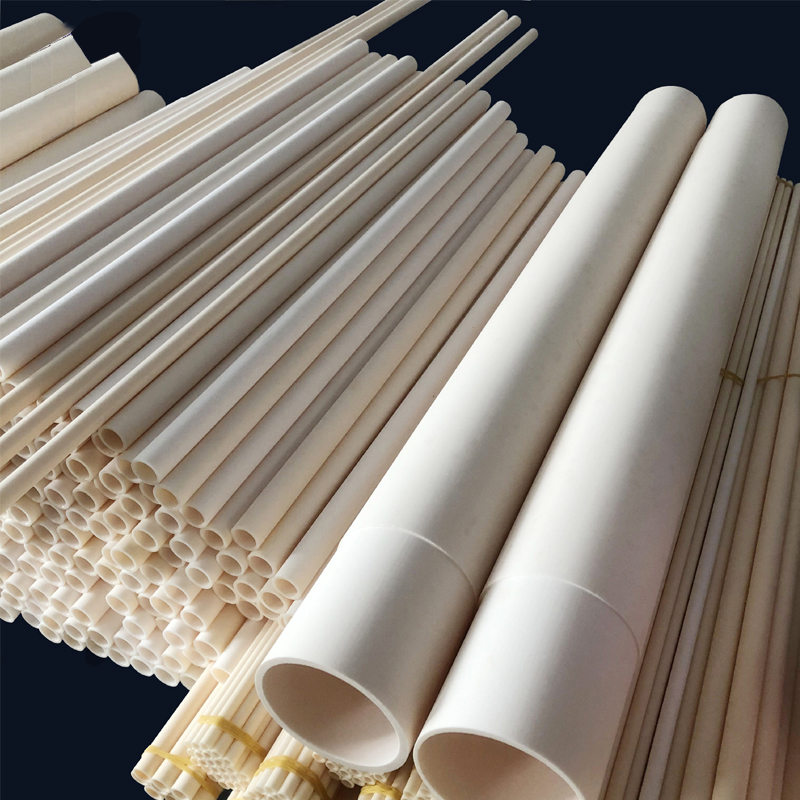
In recent days, as industrial manufacturing upgrades toward higher temperatures, greater efficiency, and improved corrosion resistance, ceramic tubes for furnaces have become a key support for technological innovation across various industries. Their applications are increasingly widespread in fields such as semiconductors, nuclear industry, and petrochemicals, with breakthroughs also being made in localized production technologies.
Ceramic tubes for furnaces, made primarily from materials such as alumina and zirconia, offer significant performance advantages. They exhibit outstanding high‑temperature resistance: alumina ceramic tubes have a melting point of up to 2050°C and maintain structural stability even under extreme heat, with a strength retention rate far superior to traditional metallic materials. Additionally, these ceramic tubes provide excellent corrosion resistance, wear resistance, and electrical insulation. They can withstand erosion by acidic and alkaline media as well as abrasion from highly abrasive materials, resulting in a service life two to three times longer than that of metal tubes made from nickel‑based alloys and similar materials.
In practical applications, alumina ceramic tubes have permeated numerous critical sectors. Within the semiconductor industry, they serve as diffusion furnace tubes and reaction tubes, ensuring high-temperature stability for wafer processing. In the nuclear industry, alumina ceramic tubes are successfully applied in ceramic electric melting furnaces; their resistance to molten glass corrosion is 50% higher than that of similar foreign products, laying a solid foundation for the localization of high-level radioactive waste vitrification technology. For the petrochemical industry, replacing metal coils with silicon carbide ceramic tubes raises the reaction temperature to 1200-1400℃, significantly increasing ethylene yield while simultaneously reducing maintenance costs associated with coking.
A key advantage of this alumina ceramic tube is its ability to withstand thermal shock without breaking or fracturing. This durability reduces the need for frequent replacement, thereby lowering maintenance costs for businesses. In addition, the smooth surface of the tube minimizes the accumulation of debris, ensuring cleaner and more efficient furnace operation.
In short, the development of alumina ceramic tubes is a major milestone for industrial furnace technology. It will revolutionize how furnaces are designed and operated, leading the manufacturing industry toward a more efficient and sustainable future.