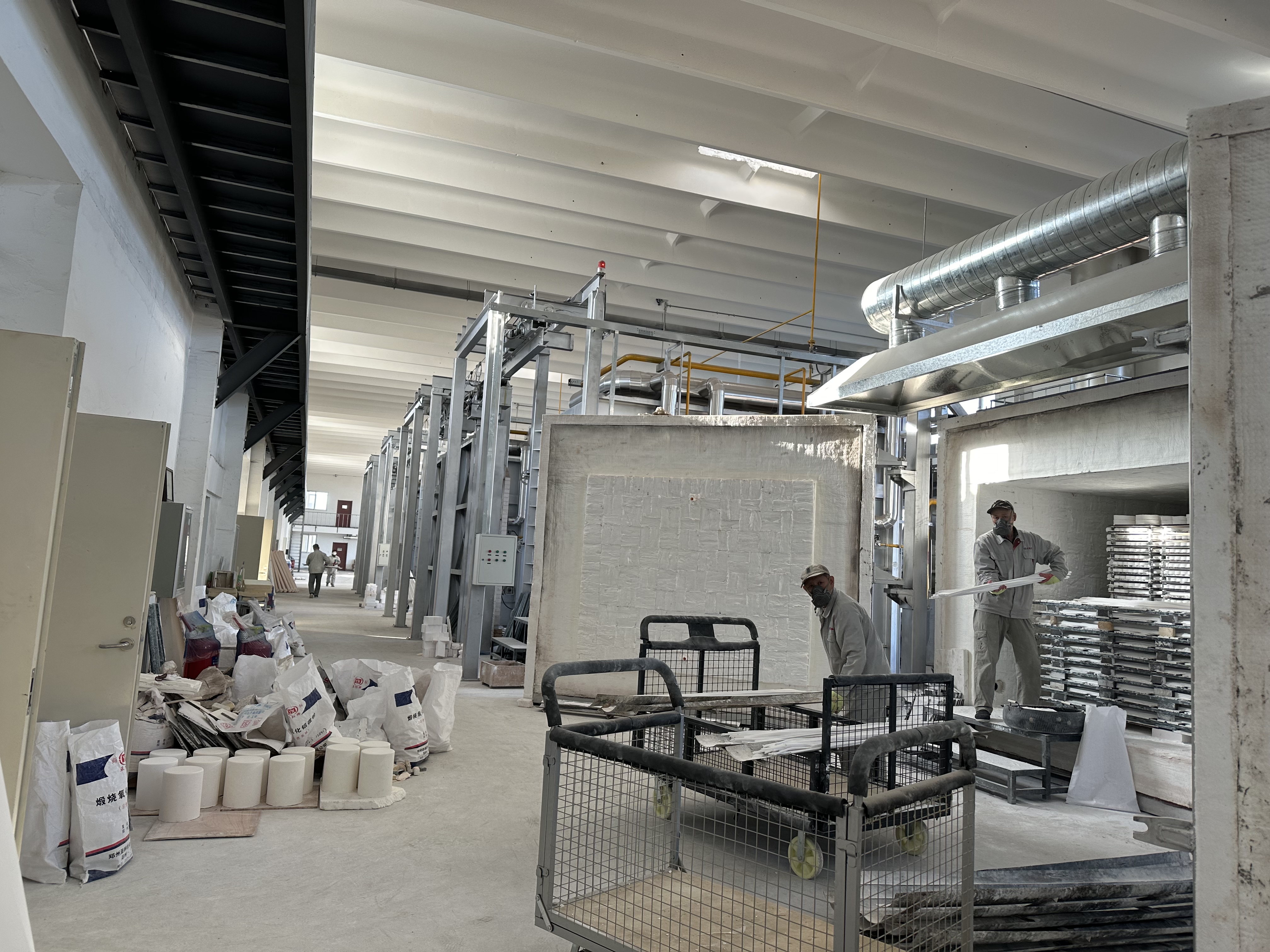
In high-temperature working conditions such as metallurgy, chemical engineering, and aerospace, alumina ceramics have become core materials due to their advantages like high hardness, corrosion resistance, and high-temperature stability. However, the concern over "whether rapid cooling and heating will cause cracking" remains a key factor for purchasers when selecting materials. This article combines the latest technical research and industry practices to provide an in-depth analysis of the thermal shock resistance of alumina ceramics, aiding purchasers in making precise selections.
Core conclusion: Ordinary alumina ceramics have limited thermal shock resistance, but modified versions can be adapted to specific scenarios involving rapid heating and cooling
The thermal shock resistance of alumina ceramics (i.e. the ability to resist rapid temperature changes without cracking) is influenced by both the intrinsic properties of the material and the preparation process. From the perspective of inherent material properties, alumina ceramics have a high coefficient of thermal expansion (7-9 × 10 ⁻⁶/℃, 25-1000 ℃), low fracture toughness (3-5 MPa · m ¹/²), and are prone to thermal stress accumulation during sudden temperature changes. Once cracks are formed, they are easy to rapidly propagate. The strength retention rate of ordinary ceramics after a single thermal shock at a temperature difference of 300 ℃ is only about 22%, and their thermal shock resistance is at a weak level in engineering ceramics.
However, through technological means such as component modification and process optimization, its thermal shock resistance can be significantly improved to meet the requirements of medium to low strength sudden cooling and heating scenarios. For example, composite ceramics prepared by adding specific proportions of reinforcing phases, or customized products optimized for microstructure, surface treatment, and geometric dimensions, can achieve thermal shock without cracks at a temperature difference of 800 ℃ and are suitable for most industrial high-temperature cycling conditions.
Technical disassembly: the key path to improving the thermal shock resistance of alumina ceramics
1. Component modification: Multiphase reinforcement to optimize thermal properties
The mainstream approach to improve thermal shock resistance is to prepare alumina based composite ceramics by adding dispersed or reinforced phases. Research has shown that when the amount of mullite added is 20% (mass fraction), the alumina mullite cordierite composite ceramic produced by pressureless co firing at 1500 ℃ for 2 hours has a relative density of 3.838 g/cm ³, a residual stress of 47.09 MPa after 800 ℃ thermal shock, and no cracks on the surface. Mullite, with its low thermal expansion coefficient (about 5 × 10 ⁻⁶/K) and whisker toughening effect, can reduce the overall thermal expansion coefficient, suppress crack propagation through bridging and crack blocking effects, and improve material toughness.
In addition, zirconia, silicon carbide, and other modified components can also be used, but attention should be paid to the issue of interfacial bonding strength - zirconia can easily lead to a high coefficient of thermal expansion, while silicon carbide may oxidize at high temperatures, requiring appropriate sintering processes.
2. Process optimization: comprehensive control from microstructure to structure
The microstructure has a significant impact on thermal shock performance. For high-density alumina ceramics, with a grain size of 10 μ m as the boundary, fine grain products have better thermal shock resistance in the small grain range, while coarse grain products perform better in the large grain range; Moderate and evenly distributed pores and microcracks can improve toughness by releasing thermal stress and suppressing crack propagation, while non-uniform pores can reduce material strength.
Surface treatment and geometric dimensions also need to be taken into account. The critical thermal shock temperature difference of alumina ceramics after grinding treatment (235 ℃) is higher than that of polished products (185 ℃), due to the initial defects on the grinding surface, which can be classified as heat dissipation impact elasticity; In terms of geometric dimensions, increasing the thickness can reduce the overall tensile stress. When the thickness increases from 2mm to 6mm, the failure temperature rises from 342 ℃ to 700 ℃, but the selection needs to be balanced according to the equipment space requirements.
Procurement Selection Guide: Match on Demand, Avoid Core Misconceptions
1. Clearly define the operating parameters and accurately locate the requirements
Before procurement, three core parameters need to be clarified: first, the maximum temperature difference range. Ordinary modified alumina ceramics can adapt to temperature differences of 300-800 ℃. For extreme temperature differences (such as sudden cooling from 1000 ℃ to room temperature), it is recommended to prioritize the selection of silicon nitride ceramics (with the best thermal shock resistance) or zirconia ceramics; The second is the frequency of temperature cycling. High frequency cycling requires special attention to fracture toughness and residual stress indicators; The third is the stress environment, and for scenarios that take into account mechanical impact, zirconia modified alumina composite ceramics can be selected.
2. Verify key indicators and avoid quality risks
Core verification metrics include:Coefficient of Thermal Expansion (CTE): Lower values are better to accommodate temperature fluctuations in service conditions.
Fracture Toughness: A value of ≥4 MPa·m¹/² is required to effectively resist crack propagation.
Strength Retention Rate after Thermal Shock: Higher retention rates after a single thermal shock indicate greater stability.
3. Combining scene selection to balance cost-effectiveness
Adapt different products to different scenarios: electronic packaging with smooth temperature fluctuations, wear-resistant components, and ordinary alumina ceramics with the best cost-effectiveness; Under low-temperature differential cycling conditions in the fields of metallurgy and semiconductor, mullite modified multiphase ceramics can balance performance and cost; For extreme temperature difference scenarios such as aerospace, it is recommended to use alumina microporous ceramics or composite ceramics, which can withstand extreme temperature differences from 1600 ℃ to -270 ℃ while meeting lightweight and insulation requirements.
Industry tip: Customization is the optimal solution for extreme working conditions
The current thermal shock resistance of alumina ceramics has been precisely customized, and buyers can communicate with suppliers about the composition ratio, sintering process, and surface treatment plan based on specific working conditions (such as medium corrosiveness, size limitations, and service life). Yunxing Industrial Ceramics can provide customized drawings and samples to optimize product structure and extend service life for high-temperature cycling scenarios.
In summary, alumina ceramics are not inherently vulnerable to rapid temperature changes; through scientific modification and process optimization, they can be adapted to most industrial scenarios. The key to procurement lies in clarifying operational requirements, verifying critical performance indicators, and—when necessary—opting for customized solutions. This approach ensures the optimal balance between performance and cost.