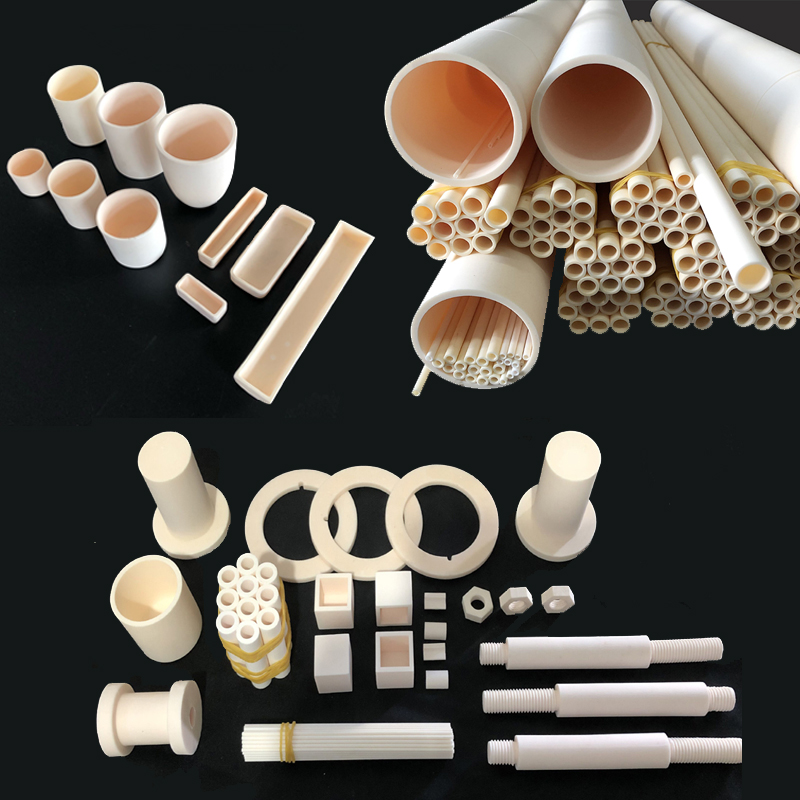
At present, the wave of Industry 4.0 is driving the upgrading of high-end industries such as intelligent manufacturing and new energy, imposing stringent requirements on the high temperature resistance, corrosion resistance and high wear resistance of core basic materials. Relying on its all-round advantages, alumina industrial ceramics have become a core support for various industries to reduce costs, improve efficiency and enhance product competitiveness. Their application scenarios are continuously expanding and market demand is rising steadily, making them one of the preferred materials for purchasers in supply chain layout.
As a special material boasting high hardness (Mohs hardness ≥ 9), high temperature resistance (up to over 1600℃), excellent electrical insulation and corrosion resistance, alumina industrial ceramics break the limitations of traditional materials and meet the precision procurement needs of various industries. In the electronics industry, it is used as insulating substrates for semiconductor chips and ceramic diaphragm supports for lithium batteries. Relying on its outstanding insulation performance and stability, it helps improve the yield rate of electronic components and meets the precision requirements of high-end electronic procurement. In the machinery industry, alumina ceramic rods and seals that replace traditional metal parts have a service life 3 to 5 times longer than that of stainless steel, which greatly reduces the operation, maintenance and procurement costs of enterprises and makes them a cost-effective choice for machinery procurement.
In the chemical industry, alumina industrial ceramic pipelines and reactor liners can withstand highly corrosive media such as 98% concentrated sulfuric acid, addressing the procurement pain points of traditional materials that are prone to wear and require frequent replacement, and helping chemical enterprises achieve continuous and stable production. In the textile industry, precision-machined accessories including thread guides and ceramic eyelets feature a significantly reduced friction coefficient, which effectively lowers the yarn breakage rate and meets the high-efficiency operation requirements of textile machinery. In addition, their high temperature resistance and impact resistance properties are widely applied in the new energy, metallurgy, mining and other sectors, catering to the full-scenario procurement needs ranging from basic manufacturing to high-end equipment manufacturing.
According to industry data, the domestic alumina ceramic market scale reached 12.8 billion RMB in 2025. The proportion of customized precision ceramic components has been on a steady rise, and procurement demand has shifted from "standardized products" to "scenario-based solutions". High-quality industrial alumina ceramics can not only accurately match procurement scenarios across various industries, but also help purchasers achieve long-term cost control by extending equipment service life and reducing maintenance frequency. As a core material with both practicality and economy in current industrial procurement, its application potential will continue to be unleashed in the future.