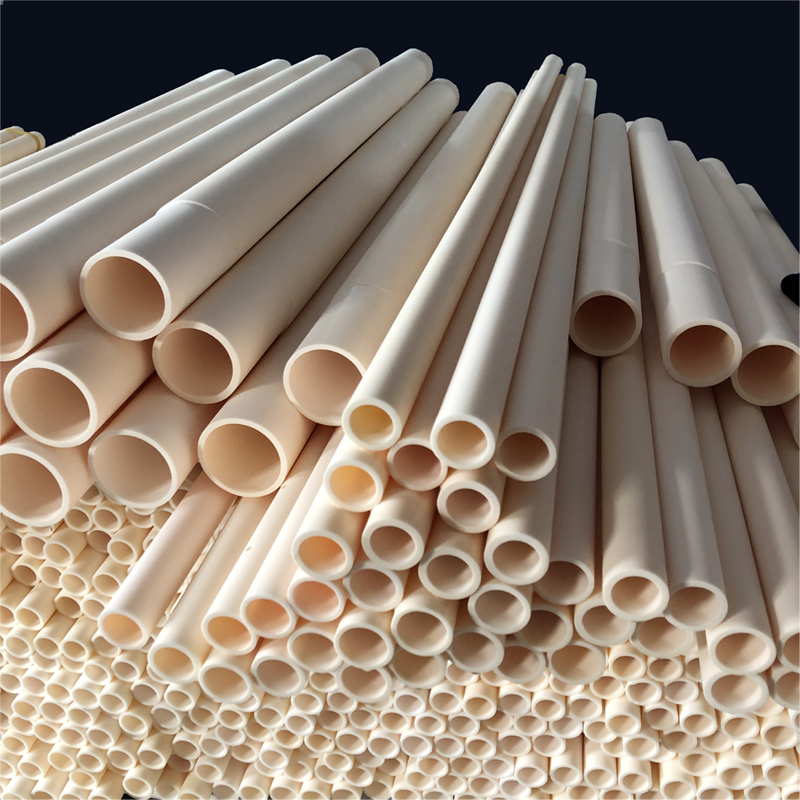
As a core component in the field of high-performance inorganic non-metallic materials, industrial alumina ceramic tubes have achieved large-scale application breakthroughs in various sectors such as semiconductors, new energy, metallurgy, chemical engineering and environmental protection in recent years, thanks to their irreplaceable comprehensive advantages including high temperature resistance, corrosion resistance, high hardness and excellent electrical insulation. With the iterative upgrading of domestic preparation processes, they are gradually breaking the import monopoly in the high-end market and emerging as an important underpinning for advancing the upgrading of China's high-end manufacturing industry and the development of green industry.
In the semiconductor and electronic industry, alumina industrial ceramic tubes have emerged as the invisible guardians for the capacity expansion of domestic chips. With the accelerated pace of semiconductor localization in China, the demand for high-purity, high-insulation and low-contamination components has surged in processes such as wafer fabrication and advanced packaging. Ultra-high purity alumina ceramic tubes with a purity of over 99.7% are widely used in core components including insulating sleeves for vacuum sintering furnaces, high-temperature process tubes for semiconductor wafer fabrication, and isolation tubes for ion implantation equipment, thanks to their properties such as no metal ion leaching and excellent high-temperature stability. These tubes can control the metal ion contamination rate of chips below 0.1ppm, effectively improving the yield of wafer processing.
The expansion of applications in the new energy sector has become the core growth driver for alumina industrial ceramic tubes. In the lithium battery manufacturing process, these tubes serve as the lining of high-temperature sintering furnaces and core components of atmosphere protection systems. Their low thermal conductivity, thermal shock resistance and corrosion resistance characteristics significantly enhance the consistency and efficiency of cathode material sintering.
The metallurgical and chemical industries, as the traditional major application fields for alumina industrial ceramic tubes, have a sustained demand for energy conservation, consumption reduction and equipment upgrading that continuously drives product iteration. In the metallurgical industry, alumina ceramic tubes with a purity of 99%/99.7% serve as core flow guiding components for molten aluminum, molten copper and high-temperature molten salt. They can withstand temperatures up to 1600℃ and resist the scouring and abrasion of high-temperature melts, with a service life 5 to 8 times longer than that of traditional metal tubes.
The high-quality development of the environmental protection industry has further expanded the application boundaries of alumina industrial ceramic tubes. Relying on their properties of wear resistance, corrosion resistance and reusability, these tubes are widely applied in flue gas desulfurization and denitrification systems, inner linings of waste incinerators, high-temperature filtration devices and other equipment.
Industry experts indicate that the competitive focus of the high-purity alumina industrial ceramic tube industry in the future will center on the independent and controllable supply of high-purity raw materials, breakthroughs in precision forming processes, and the development of cross-field application solutions.