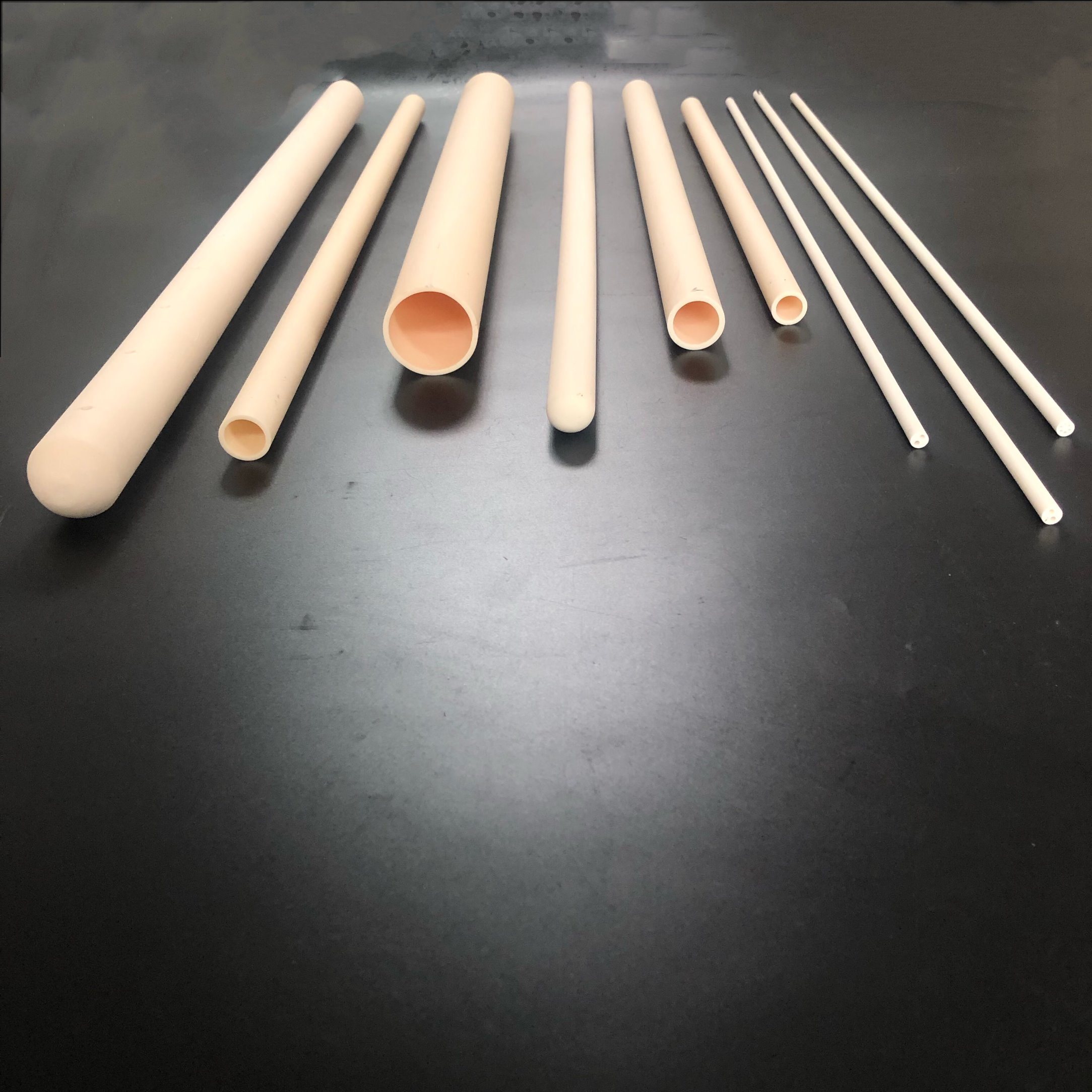
As the global industrial transformation towards high-end and intelligent manufacturing accelerates, thermocouples serve as core components in industrial temperature measurement, and the performance of their protective sleeves directly determines measurement accuracy, equipment safety and service life. Among protective sleeves made of various materials, alumina ceramic tubes have become the first choice for industrial enterprises worldwide by virtue of their core advantages such as high temperature resistance, corrosion resistance and high insulation. They are leading the thermocouple protective sleeve industry to upgrade towards high efficiency, stability and long service life, with the relevant market scale rising steadily.
Thermocouple protection tubes act as a protective barrier that isolates temperature-sensing elements from severe working conditions, and are widely used in high-temperature, corrosive and high-pressure scenarios such as metallurgy, chemical engineering, new energy, semiconductors, and aerospace. In the past, protection tubes made of metals, quartz and other materials could hardly meet the stringent requirements of high-end industry due to performance limitations — metal tubes generally have a maximum temperature resistance of below 800℃ and are prone to erosion by molten metals and corrosive gases; quartz tubes feature low mechanical strength and poor thermal shock resistance, which make them easy to crack in scenarios with drastic temperature changes. Frequent replacement not only increases production costs, but may also disrupt production continuity.
Industry data shows that the global thermocouple protection tube market is growing steadily. The market size of China is expected to exceed 2.5 billion yuan in 2025, with a stable compound annual growth rate of over 12%. Among all products, alumina ceramic tubes account for 68.4% of the domestic market share by virtue of their performance advantages, emerging as the mainstream product in the market.
In terms of application scenarios, alumina ceramic tubes have achieved full industry coverage:
In the metallurgical field, they are used for temperature measurement and protection of equipment such as blast furnaces and converters, helping to improve smelting precision;
In the new energy field, they support the stable operation of photovoltaic monocrystalline furnaces and lithium battery sintering equipment, meeting the high-end development demands of the new energy industry;
In the semiconductor field, the total content of metal impurities can be controlled below 10ppm, complying with the SEMI F57 semiconductor cleanliness standard, and they are applied to temperature measurement and protection of ion implantation equipment and vacuum chambers;
In the aerospace field, their characteristics of light weight (with a density only one-third that of steel) and resistance to cosmic ray irradiation make them suitable for high-end scenarios such as ground tests of rocket engines and satellite sensors.
Industry experts indicate that with the in-depth advancement of Industry 4.0 and the development of cutting-edge fields such as fusion energy and very-high-temperature gas-cooled reactors in the future, the requirements for the temperature resistance, corrosion resistance and precision of thermocouple protection sleeves will be further raised. As the option with the most balanced performance and optimal cost-performance ratio, alumina ceramic tubes will see a sustained rise in market demand, while relevant technologies will achieve breakthroughs toward the directions of nanocomposite modification and intelligent monitoring. Through technologies such as carbon fiber reinforcement and rare earth doping modification, the thermal shock resistance and service life of the products will be further improved; combined with AI intelligent monitoring systems, real-time early warning of the service status of ceramic tubes will be realized, driving the transformation of thermocouple protection sleeves from "passive protection" to "active management and control".
From traditional industry to high-end manufacturing, from ground equipment to aerospace, alumina ceramic tubes have firmly consolidated their status as the first choice in the field of thermocouple protection sleeves by virtue of their robust performance. In the future, with the continuous innovation of material technologies and manufacturing processes, alumina ceramic tubes will further break through performance boundaries, provide core support for the efficient, stable and safe development of the global industrial temperature measurement field, and boost the advancement of industrial manufacturing towards higher quality, greener and more intelligent development.