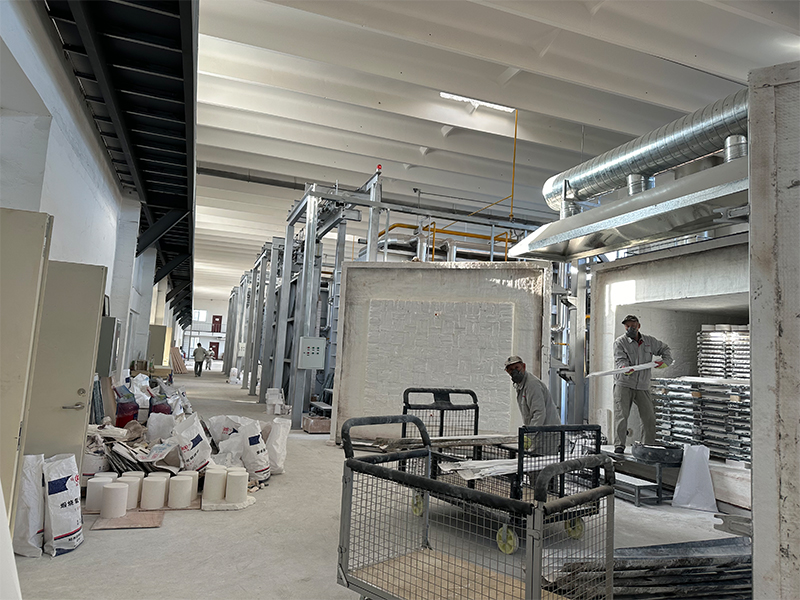
With outstanding properties such as high hardness, high temperature resistance, corrosion resistance and excellent electrical insulation, alumina ceramics are known as "high-performance core materials" in the advanced manufacturing sector. As a critical process that determines product performance and cost, its sintering technology has long attracted extensive attention across the industry.
In the field of traditional sintering processes, pressureless sintering and hot-press sintering remain the mainstream methods for large-scale production at present.
Pressureless sintering features simple equipment and low costs, so it is widely adopted in the production of conventional alumina ceramic products such as insulators and wear-resistant parts. It densifies powder raw materials at a high temperature ranging from 1600℃ to 1800℃. While it can meet the basic demands of general industries, it suffers from drawbacks including coarse grain growth caused by ultra-high temperatures and excessive energy consumption. Energy consumption alone accounts for 20%-30% of the total product cost.
By combining high temperature with uniaxial pressure, hot-press sintering lowers the sintering temperature to around 1500℃ and effectively inhibits grain growth. The prepared alumina ceramics boast high density, with a flexural strength reaching up to 700 MPa, making them suitable for low-batch, high-performance applications like precision cutting tools and aerospace components. Nevertheless, restricted by heavy mold wear and low production efficiency, this method cannot be popularized for mass manufacturing on a large scale.
To break through the bottlenecks of traditional processes, scientific research institutions and enterprises in China have intensified R&D efforts on advanced sintering technologies in recent years. Cutting-edge techniques such as microwave sintering, spark plasma sintering (SPS), and hot isostatic pressing (HIP) have gradually achieved industrial application.
Microwave sintering realizes integral internal heating of ceramics via a microwave field, with a heating rate reaching 50℃ per minute. Compared with conventional methods, its sintering temperature is reduced by 100–150℃ and energy consumption is lowered by 30%–50%. Meanwhile, the finished products feature uniform grain structure and higher light transmittance. This technology is now widely applied in fields including transparent ceramics and electronic substrates.
Spark plasma sintering activates particle surfaces through plasma generated by pulsed electric current to achieve rapid densification. When nano alumina powder is processed by this technique, ceramic products with a relative density of 99.5% can be obtained at merely 1140℃, delivering a light transmittance of 71%. It provides an efficient technical route for the fabrication of nano-ceramics.
Industry experts state that the sintering technology of alumina ceramics is advancing toward energy conservation, refinement and diversification. In the future, it will further promote the integration of multiple processes, optimize equipment costs, and break through the sintering bottlenecks for large-sized and complex-shaped products. Meanwhile, with the deepened synergistic effect of nanotechnology and additives, as well as policy support for advanced new materials, alumina ceramics will achieve broader applications in emerging fields such as semiconductor packaging, medical implants and quantum computing, providing crucial support for the upgrading of China's high-end manufacturing industry.