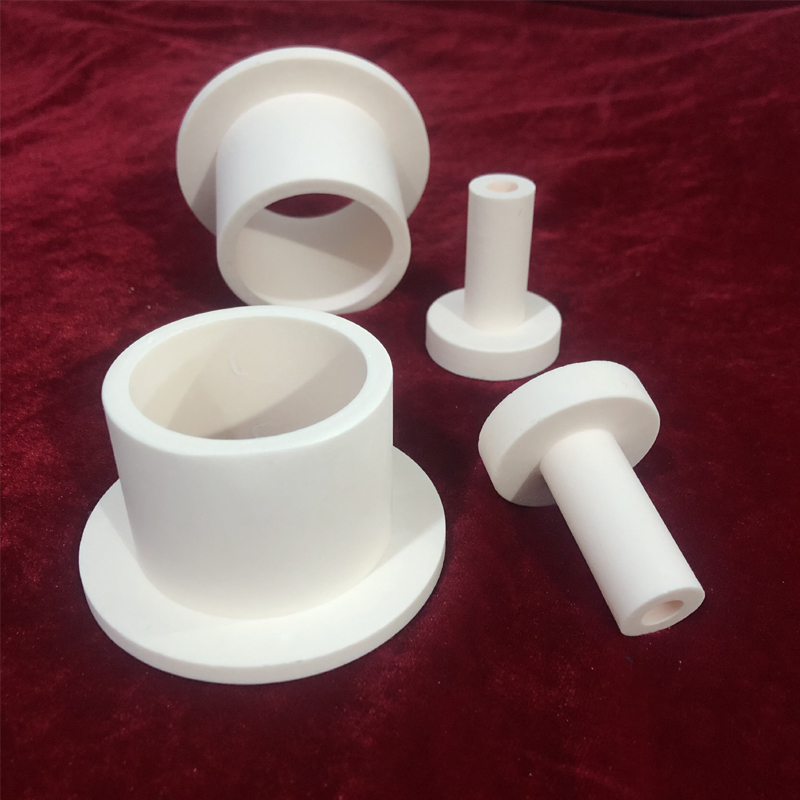
In the constantly developing industrial manufacturing industry, the demand for high-performance, durable, and reliable fastening components has never been greater. One of the innovations that has caused a sensation in the industry is alumina ceramic parts. These cutting-edge components will redefine the standards for fastening solutions in various demanding applications.
Alumina ceramics are renowned for their outstanding performance and have long been the preferred material for engineers and designers seeking to overcome the limitations of traditional materials. Alumina ceramics have high hardness comparable to diamond and unparalleled wear resistance. This makes it an ideal material for nut parts that withstand constant friction and stress in industrial environments.
The Alumina Ceramic Parts are not just about durability; they also bring a host of other benefits to the table. Their excellent corrosion resistance ensures that they remain intact and functional even in the harshest chemical environments. Whether it's exposure to acids, alkalis, or salts, these nut parts stand strong, maintaining their structural integrity and performance over time.
One of the standout features of Alumina Ceramic Parts is their high-temperature stability. In industries where components are often exposed to extreme heat, such as in aerospace, automotive, and heavy machinery, these nut parts can withstand temperatures that would cause conventional materials to fail. This thermal resilience is crucial for maintaining the safety and efficiency of critical systems.
Faced with the multitude of suppliers and product specifications on the market, how can buyers avoid "pitfalls" and find the alumina ceramic parts that truly match their requirements? The key lies in aligning with specific industry scenarios and focusing on critical metrics and supplier capabilities.
Based on the industry requirements is the core logic for selection:
- Textile industry: Focus on surface finish (Ra ≤ 0.2 μm recommended) and wear resistance. Choose manufacturers that support customization and can optimize product parameters according to machine speed.
Chemical industry: Prioritize corrosion resistance. Customized products with rare-earth elements reduce acid–alkali corrosion rates by 40% compared with standard products, making them suitable for reactors, pipelines, and similar applications.
Electronics industry: Emphasize insulation and thermal stability. Select products with stable dielectric constant and low coefficient of thermal expansion (≤ 7.5×10⁻⁶/℃) to ensure reliable packaging of electronic components.
A three-step general selection process is recommended:
Step 1: Define core requirements. For high-temperature scenarios, focus on the maximum temperature resistance; for precision equipment, prioritize dimensional accuracy.
Step 2: Verify supplier track records. Give preference to enterprises with collaborative experience in your specific industry and evaluate product quality based on real-world application results.
Step 3: Confirm service capabilities.
For custom requirements, pay attention to the design cycle (recommended ≤ 15 days).
For bulk purchases, verify production capacity and delivery stability.
Additionally, ensure the supplier provides sample testing and quality traceability services.