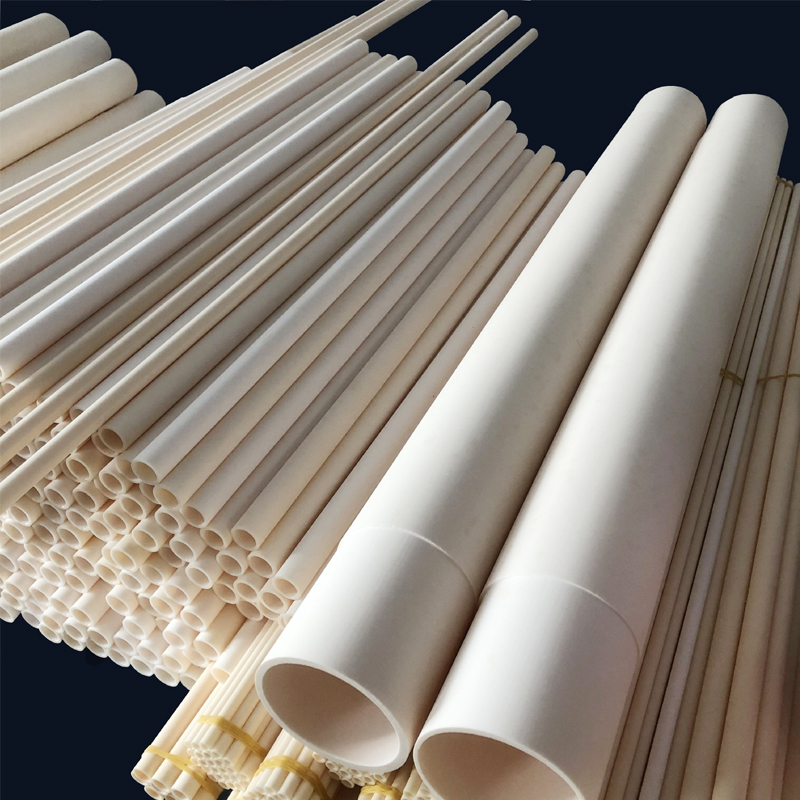
As a core branch of the field of inorganic non-metallic materials, alumina ceramics have been deeply integrated into various industrial sectors such as machinery manufacturing, electronics and electric power, metallurgy and chemical engineering, new energy, aerospace, and others, thanks to their unique advantages including high temperature resistance, high hardness, corrosion resistance, and excellent insulation properties. They have become a "key material" for driving industrial upgrading, improving equipment performance, and reducing production costs.
With continuous breakthroughs in domestic technologies, alumina ceramics are gradually breaking foreign monopolies and achieving large-scale substitution in high-end industrial scenarios, injecting new momentum into the high-quality development of China's manufacturing industry.
The core advantages of alumina ceramics stem from the uniqueness of their composition and crystal structure. Their properties can be gradiently differentiated by regulating purity, making them suitable for full-scenario applications ranging from low-end wear-resistant parts to high-end electronic components.
In the energy and power sector, alumina ceramics have become a key tool for thermal power enterprises to reduce costs and improve efficiency.
For a long time, key equipment in the thermal power industry, such as pulverized coal exhausters, has been subjected to high-concentration coal powder erosion and high-temperature environments. Traditional carbon steel or high-chromium cast iron linings suffer severe wear and require shutdown and replacement every 6–8 months on average, which not only affects power generation efficiency but also increases operation and maintenance costs.
In recent years, alumina ceramic linings with a purity of 95% and above have gradually replaced traditional materials. With a hardness of 1500–1800 HV, they are far harder than high-chromium cast iron and feature excellent chemical stability, showing almost no corrosion in sulfur-containing and humid coal powder environments.
In the mining and metallurgy industry, the wear-resistant advantages of alumina ceramics are fully utilized. In scenarios such as coal transportation and slurry delivery in mines, high-speed impacts from hard particles like sand and ore often cause rapid wear to pipelines and equipment. However, the wear rate of alumina ceramics is only 1/50 that of high-chromium cast iron and 1/200 that of stainless steel.
With the rise of the high-end manufacturing industry, alumina ceramics have achieved breakthrough progress in applications in fields such as semiconductors and new energy.
Industry insiders said that the application scenarios of alumina ceramics are constantly expanding. In the future, combined with intelligent monitoring technology and nanocomposite technology, it will shift from "passive protection" to "active operation and maintenance".Its properties such as thermal conductivity and impact resistance will be further improved, enabling it to play a greater role in aerospace, environmental protection, medical treatment and other fields.