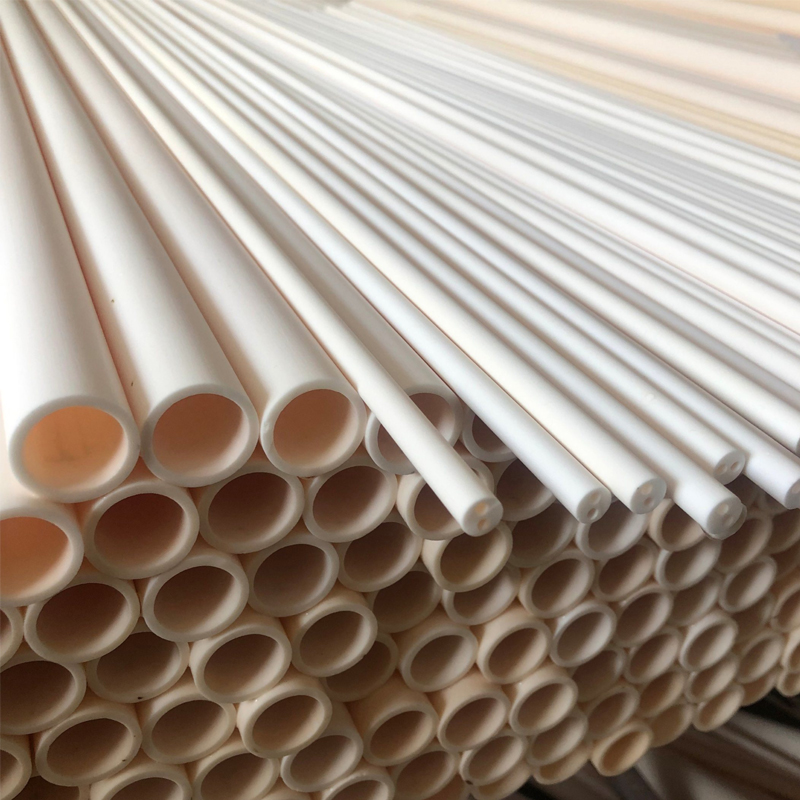
In the realm of advanced ceramics, alumina ceramic insulator tubes stand out for their exceptional properties and wide range of applications. Made from aluminum oxide, these tubes are known for their high strength, wear resistance, and thermal stability, making them indispensable in various industrial sectors.
Alumina ceramic tubes excel in electrical insulation, serving as insulators in high-voltage applications and as protective casings for electronic components. Their high dielectric strength ensures safety and reliability in electrical and electronic tools.
Due to their high thermal conductivity and stability, these tubes are ideal for use in furnaces and heat exchangers. They efficiently transfer heat and withstand the high temperatures and thermal cycling associated with these applications
In industries such as mining, chemical processing, and manufacturing, alumina ceramic tubes are used as wear-resistant linings for pipes and chutes. Their strength help to reduce maintenance costs and downtime by protecting equipment from wear.
Alumina ceramic tubes are valued for their corrosion resistance and chemical inertness in the chemical and petrochemical industries. They are used in drive supports, reactor linings, and pipelines that handle corrosive chemicals and high-temperature processes.
The biocompatibility and chemical resistance of alumina make it an ideal material for medical and laboratory equipment. Alumina ceramic tubes find use in clinical implants, laboratory crucibles, and precision tools where purity and durability are paramount.
With the advancement of the 'Dual Carbon' goals and the upgrading of intelligent manufacturing, the alumina ceramic insulating tube industry is accelerating its transformation toward intelligence, green production, and customization. The optimization of sintering parameters using AI algorithms has been industrialized; for instance, a certain enterprise utilized machine learning to increase the yield rate of hot-pressed sintering from 75% to 92% while shortening the R&D cycle by 40%. The application of bio-based binders has reduced carbon emissions during production by 40%, and technologies such as microwave sintering save more than 50% energy compared to traditional processes, aligning with the trend of green manufacturing.
Industry experts indicate that with the continuous breakthroughs in nanocomposite technology and multi-field coupled sintering technology, alumina ceramic insulating tubes will evolve toward the integration of structural and functional characteristics. By incorporating composite functions such as heat dissipation and sensing, these tubes will further expand their application boundaries in cutting-edge fields including solid-state batteries and deep-space exploration equipment, thereby providing more robust material support for the upgrading of the high-end manufacturing industry.