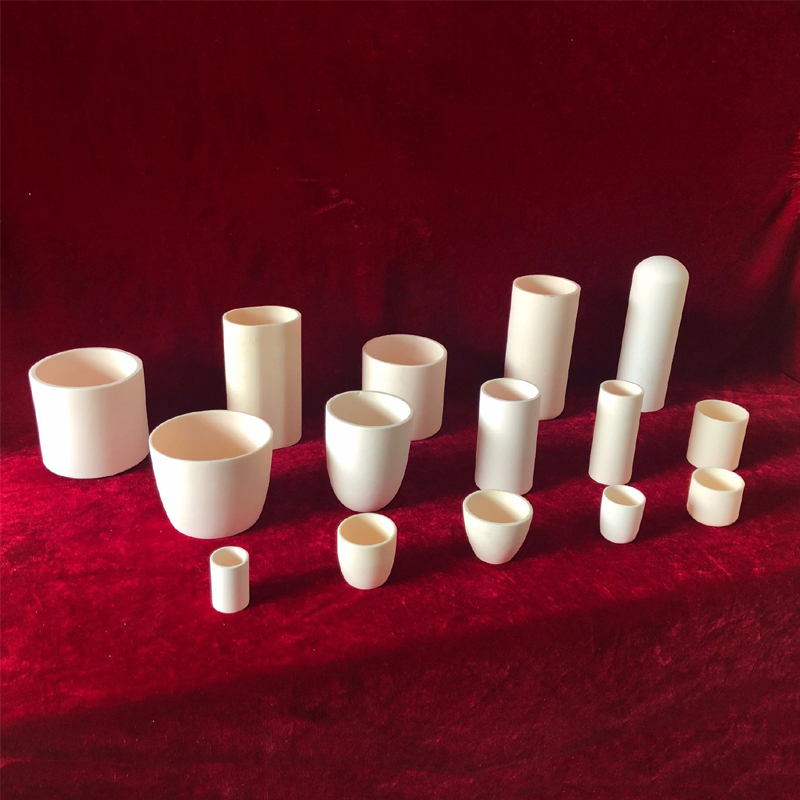
Alumina ceramic crucibles have become indispensable in industries and laboratories where high-temperature processes are crucial. These crucibles are renowned for their excellent heat resistance, chemical stability, and mechanical strength, and are changing the way materials are tested, melted, and synthesized.
Manufactured using high-purity alumina, these crucibles can withstand temperatures exceeding 1,700°C, making them ideal for applications in metallurgy, material science, and chemical analysis. Their resistance to corrosion and wear ensures longevity even in the most demanding environments.
Industries are increasingly adopting alumina ceramic crucibles for applications such as metal casting, high-temperature research, and thermal analysis. In laboratories, they are essential for studying chemical reactions, melting metals, and conducting high-temperature experiments.
In addition to their functional benefits, alumina ceramic crucibles are available in a range of shapes and sizes, providing flexibility for specific applications. Whether it’s a cylindrical, conical, or rectangular design, the adaptability of alumina ceramic crucibles makes them a preferred choice across various domains.
As advancements in material science continue, alumina ceramic crucibles are expected to play a pivotal role in innovative industrial and research applications. Their durability and reliability ensure they remain a cornerstone of high-temperature operations, supporting progress in technology and manufacturing worldwide.
The trajectory of technological evolution within the sector has crystallized. In addition to advancements in binder technology, the widespread penetration of isostatic pressing, the development of high-temperature and durable coatings, and the utilization of smart sintering apparatus have emerged as the key battlegrounds for enterprises. According to industry specialists, the scalability of digital twin technology in manufacturing is projected to boost the yield of alumina ceramic crucibles from 79% at present to 91% by 2028.
However, the industry still faces challenges, such as the risk of price fluctuations for raw materials like alumina and zirconia, as well as the urgent need to address insufficient core patent coverage for high-end products. Industry experts suggest that companies should increase R&D investment and establish a closed-loop ecosystem from raw materials to recycling through vertical integration. At the same time, they should strengthen industry-university-research collaboration to accelerate breakthroughs in key technologies such as ultra-flat crucibles and large-size composite crucibles, thereby further enhancing the competitiveness of domestic products in the global high-end market.