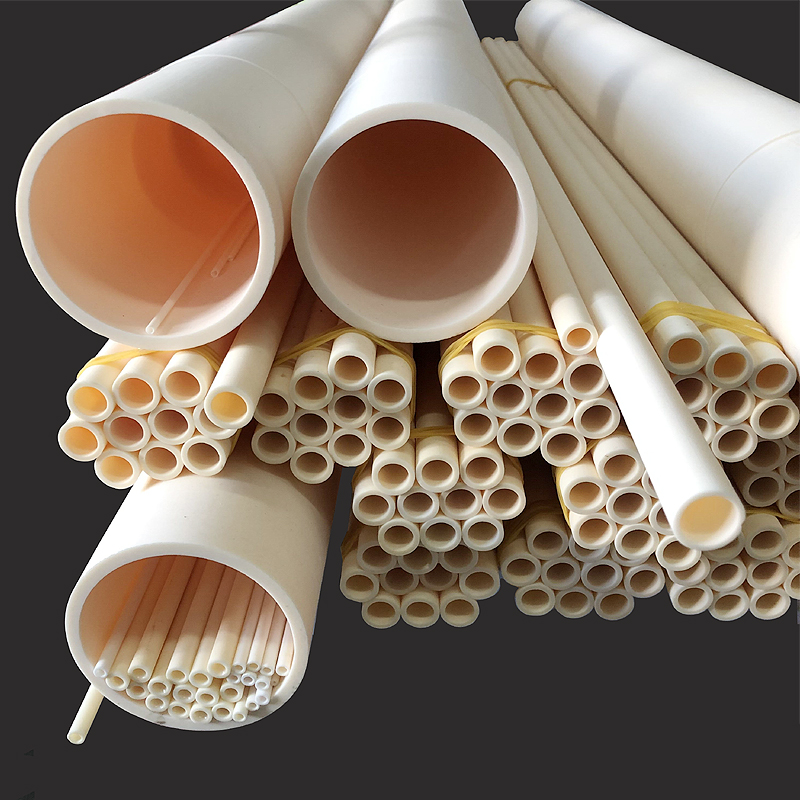
In 2026, manufacturers of experimental furnaces such as vacuum sintering furnaces and high-temperature annealing furnaces will adopt a unified material selection trend: gradually phasing out 95% alumina ceramic tubes and stainless steel liners, and setting 99% high-purity alumina ceramic tubes as standard consumables.
The need for zero pollution in scientific research experiments
99% alumina ceramics contain only 1% or less of sintering aids, with a total impurity content of alkali metals and heavy metals below 30ppm. There is no free ion precipitation under high-temperature oxidation, inert, and weak reducing atmospheres, making them perfect for material precision experiments. Several leaders of experimental furnace companies have stated that over 70% of sample contamination issues in previous customer complaints were caused by low purity ceramic tubes. After replacing the 99 alumina ceramic tubes, the stability of experimental data increased by 90%, and equipment after-sales disputes were significantly reduced.
High temperature extreme working conditions require
1.Higher temperature resistance upper limit: 99 alumina can operate continuously and stably at 1600 ℃, and can withstand high temperatures of 1800 ℃ for a short period of time.
2. The risk of thermal shock is significantly reduced: the coefficient of thermal expansion is lower, and it can withstand rapid temperature changes of over 80 ℃ per minute, with thousands of repeated cold and hot cycles without cracking.
3. Chemical inertness: In addition to hydrofluoric acid and high temperature concentrated alkali, 99 porcelain can withstand hydrogen, nitrogen, chlorine, sulfurization atmosphere, and various acid-base steam corrosion.
Better overall cost
The purchase price of 99% alumina ceramic tubes is higher than that of 95% porcelain, but due to their excellent performance, long-term use is actually more economical.
In terms of service life, 99 alumina ceramic tubes can be stably used for 2-3 years under normal laboratory conditions, with a 70% reduction in replacement frequency. The cost of laboratory consumables procurement and shutdown maintenance is significantly reduced.
Industry Outlook
The technological iteration of the alumina ceramic industry continues to advance, and 99.7% and 99.9% ultra-high purity alumina ceramic tubes are gradually entering the ultra precision experimental scene. However, 99% alumina ceramic tubes will occupy the mainstream supporting position of general high-end experimental furnaces for a long time due to their balance between performance and cost.