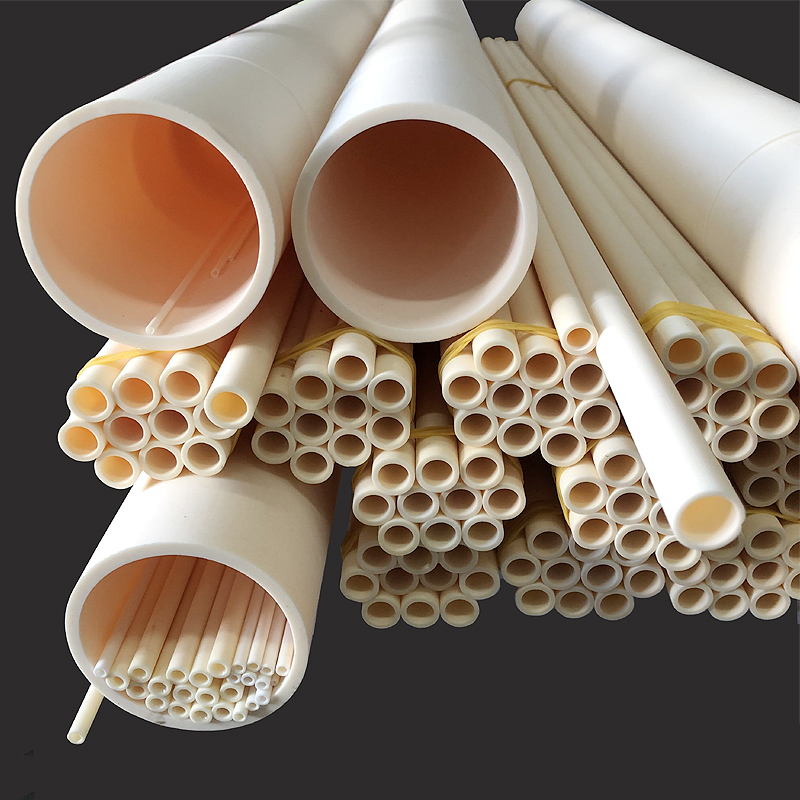
The price of alumina ceramic tubes is not fixed; it is comprehensively influenced by multiple factors including raw materials, production processes, product specifications, market supply and demand, and additional services. Prices can vary by several times under different conditions.
Raw material quality is the core foundation determining price. The core raw material of alumina ceramic tubes is alumina powder, whose purity is directly linked to product performance and cost—the higher the purity, the higher the price. It is reported that ordinary 95% alumina tubes are priced at about USD0.6–71.5 per piece, while high-purity products with a purity of ≥99% can reach USD1.5–285.7 per piece. Ultra-high-purity products with purity above 99.5%, used in high-end sectors such as semiconductors and aerospace, command even higher prices. Meanwhile, fluctuations in bauxite prices and changes in energy costs are directly passed on to alumina powder, thereby affecting the pricing of ceramic tubes. In 2023, alumina prices rose by 10% year-on-year, which drove up the costs of related products.
Production process differences significantly affect pricing levels. Currently, the mainstream forming processes include extrusion, slip casting, and isostatic pressing. Among them, extrusion is suitable for mass production of standard tubes with the lowest cost; slip casting is applicable to complex and large-sized products, and the slow process leads to higher costs; isostatic pressing produces products with high density and optimal performance, but entails high equipment investment and long production cycles, resulting in the highest cost, with product prices far exceeding those of other processes. In addition, sintering temperature and subsequent precision machining requirements also increase costs; processes such as diamond tool grinding and hot-press sintering further drive up product prices.
Product specifications and customization requirements further widen the price gap. Alumina ceramic tubes in standard sizes (Φ5–120 mm, L ≤ 1800 mm) have relatively stable pricing, while large-diameter, thick-walled, or custom-shaped products command significantly higher prices due to greater processing difficulty and high scrap rates. Additionally, prices rise with stricter performance requirements: for example, high-temperature and high-pressure resistant alumina ceramic tubes used in extreme conditions require special formulations and manufacturing processes, leading to a substantial increase in production costs.
When selecting alumina ceramic tubes, it is necessary to consider your specific application scenarios, balance performance and cost, and avoid blindly pursuing high-purity and high-precision products. In the future, with the increasing proportion of recycled alumina and process upgrades, it is expected to further stabilize price fluctuations and promote the sound development of the industry.