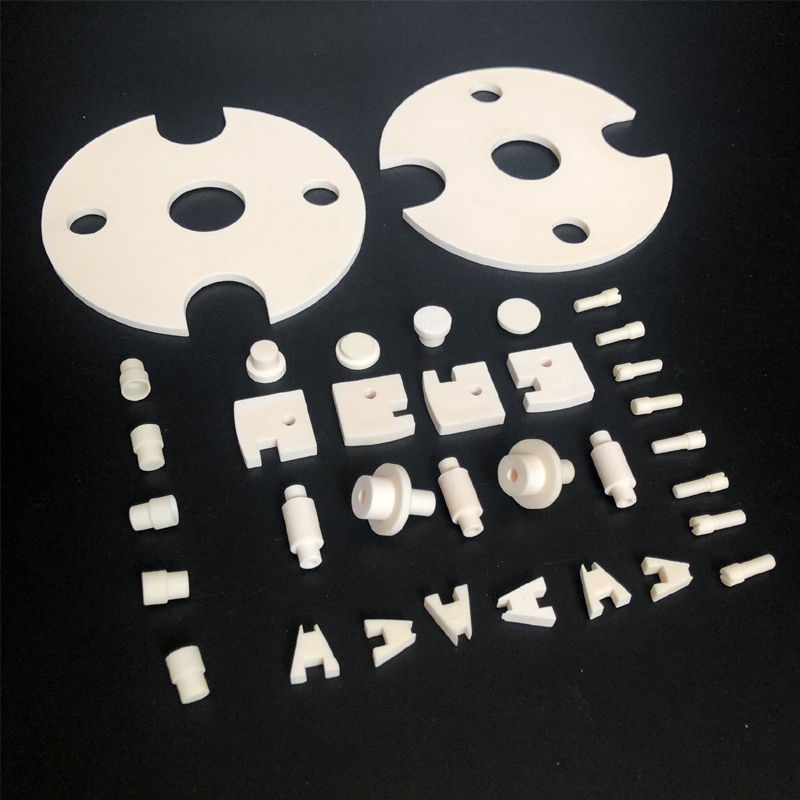
The development of alumina (Al2O3) high-temperature insulation ceramics in the industrial field is satisfied with the application of modern technology in various industries. The most common use in "high-precision ceramic parts" products is undoubtedly high-purity alumina ceramics.
Industrial alumina (Al2O3) insulating ceramics, also known as device ceramics, are used in electronic equipment to install, fix and protect components, as the insulating support for current-carrying conductors and ceramics for various integrated circuit substrates.
Industrial alumina (Al2O3) insulating ceramics have low dielectric constant, low dielectric loss, high mechanical strength, and high dielectric strength, insulation resistance and thermal conductivity. Commonly used industrial insulating ceramics are high-alumina porcelain, steatite porcelain and so on.
With the development of the electronics industry, especially the advent of thick film, thin film circuits and microwave integrated circuits, higher requirements have been placed on packaging industrial ceramics and substrates, and there have been many new varieties. For example: beryllium oxide porcelain, boron nitride porcelain and so on. Industrial insulating ceramics High alumina ceramics are mainly crystals of α-alumina, industrial ceramics containing more than 99% alumina. With excellent electromechanical properties, it is one of the most widely used industrial insulating ceramics. High-purity alumina ceramics have a very high melting point, high hardness and high mechanical strength.
Due to the relatively large increase in the coefficient of thermal expansion, the thermal shock stability is reduced. It can be used to manufacture insulating ceramic parts for ultra-high frequency and high-power electric vacuum devices, as well as ceramic shells and various ceramic substrates for vacuum capacitors.
Currently, China's high-temperature equipment is rapidly iterating towards ultra-high temperature, long lifespan, and high precision. As the core high-temperature resistant structural material, alumina ceramics have a clear high-temperature performance mechanism, which will effectively solve the industry pain points of insufficient adaptability and limited working condition tolerance of high-end high-temperature ceramic components. In the future, with the continuous upgrading of material modification processes and precision forming technologies, high-temperature resistant and highly stable alumina ceramic structural components will be widely used in aerospace hot end components, semiconductor high-temperature processes, hydrogen energy high-temperature equipment, high-end metallurgical equipment and other fields, laying a solid material foundation for the upgrading of high-end manufacturing industry.