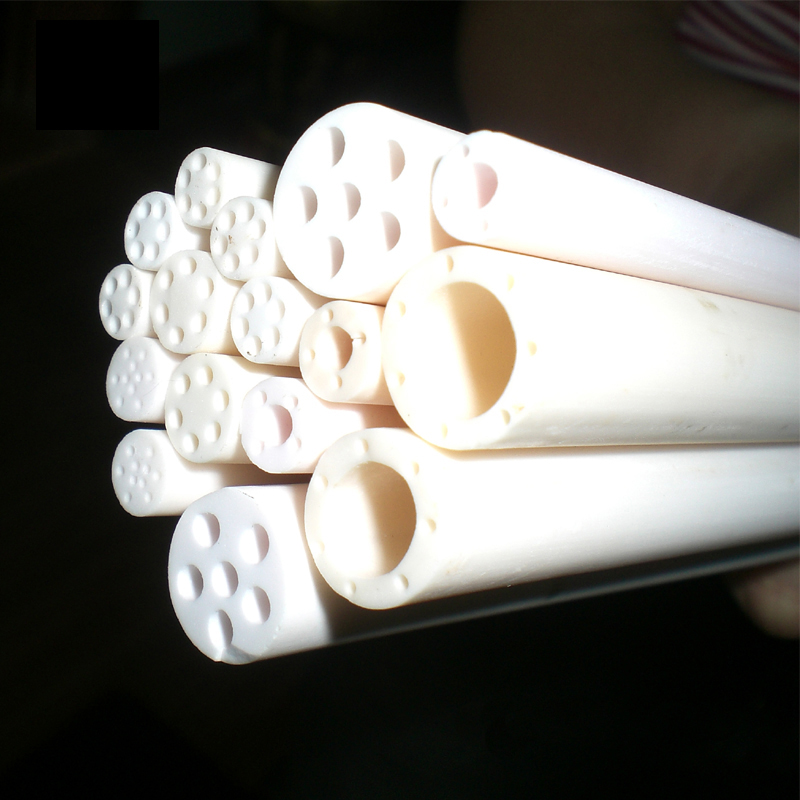
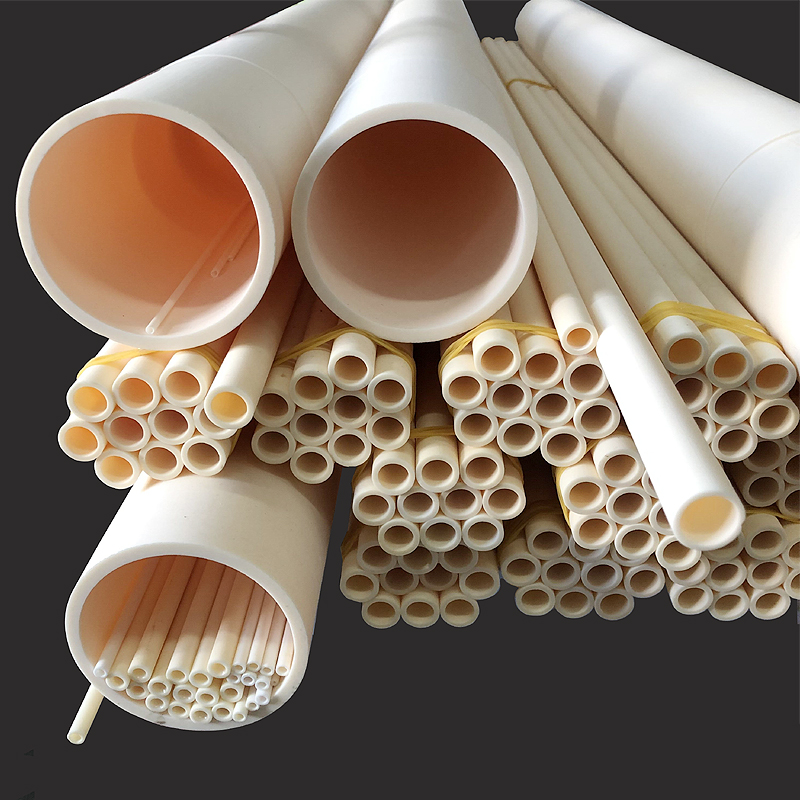
Porous and dense alumina ceramic tubes feature vastly different microstructures and distinct performance characteristics.
Their essential difference lies in the microscopic pore structure, which directly determines their respective properties.
Dense alumina ceramic tubes: They feature a compact structure with no pores, zero water absorption and air permeability. The alumina content generally ranges from 92% to 99.9%. Boasting ultra-high mechanical strength (compressive strength up to 2000MPa), excellent electrical insulation (dielectric strength of 12KV/mm) and zero leakage performance, they are also resistant to high temperatures (maximum 1600℃), abrasion and corrosion, making them ideal for high-pressure, sealed and heavy-duty working conditions.
Porous alumina ceramic tubes: They contain a large number of interconnected or closed pores, with adjustable porosity ranging from 20% to 90% and pore sizes between 4nm and 15μm. Featuring high permeability, ultra-large specific surface area and low thermal conductivity, as well as good heat and corrosion resistance, they are well suited for filtration, catalysis, thermal insulation and other functional applications.
Selection Guide: Determine requirements based on working conditions and select materials according to structure.
| Comparison Items | Porous Alumina Ceramic Tubes | Dense Alumina Ceramic Tubes |
| Core Requirements | Filtration, catalysis, ventilation, thermal insulation | Wear resistance, sealing, insulation, high strength |
| Key Performance | High permeability, large specific surface area | Zero leakage, high insulation, ultra-high hardness |
| Typical Working Conditions | High-temperature flue gas dedusting, wastewater treatment, catalytic reaction | High-pressure corrosive medium transportation, semiconductor insulation, wear-resistant pipelines |
| Cost Range | Mid-low range (Higher porosity leads to lower cost) | Mid-high range (Higher purity leads to higher cost) |
Market prospects: dual pronged approach, jointly welcoming billions of blue oceans
Tightened environmental regulations and the booming new energy industry have fueled a sharp rise in demand for porous alumina ceramic tubes in flue gas treatment, lithium battery separators, biopharmaceutical purification and other fields.
Dense alumina ceramic tubes have seen a continuous increase in market penetration in precision insulation, wear-resistant conveyance and structural components for extreme working conditions, supported by semiconductor localization, high-end chemical industry upgrading and aerospace development.