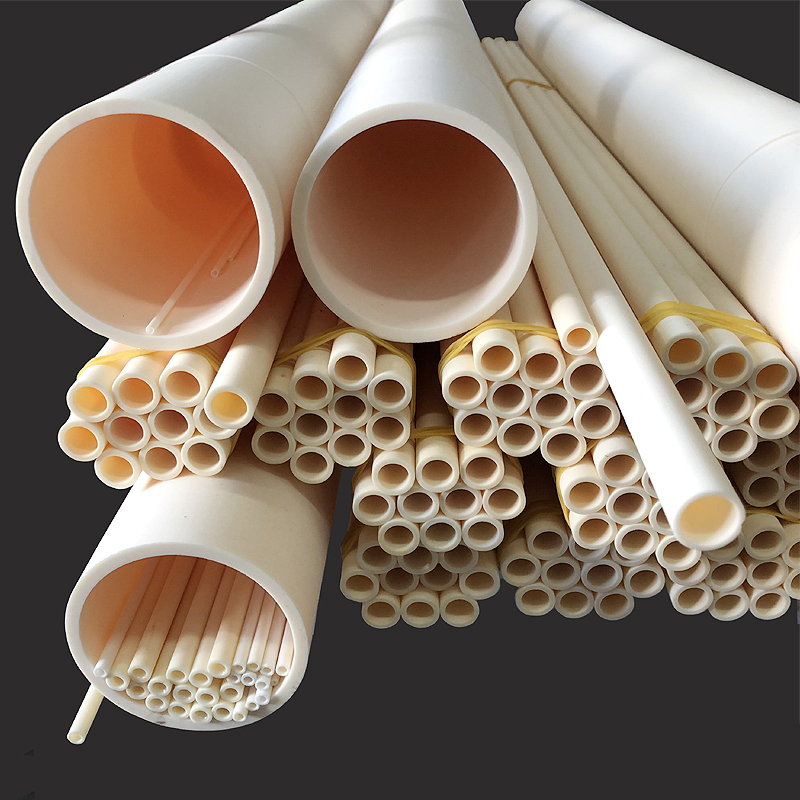
Alumina ceramic tubes are industrial ceramic components manufactured using high-purity alumina as the core raw material through multiple processes such as powder preparation and high-temperature sintering. Relying on the corundum crystal structure of alumina, they exhibit far superior chemical stability compared to conventional metals, laying a fundamental foundation for their excellent corrosion resistance.
The corrosion resistance of alumina ceramic tubes essentially stems from their unique physical and chemical properties.
Alumina itself is chemically inert. When exposed to corrosive substances, a dense protective film forms on its surface, much like a solid armor, which effectively prevents corrosive media from reacting with the internal material. Meanwhile, alumina ceramic tubes sintered at high temperatures develop a dense α-alumina crystal structure with a porosity of less than 1%, effectively blocking the inward diffusion of corrosive media. In addition, due to its electrochemical inactivity, it does not suffer from electrochemical corrosion such as pitting corrosion and crevice corrosion, further enhancing its corrosion resistance.
Laboratory test data shows that alumina ceramic tubes can resist corrosion from medium-to-strong acid and alkali media such as hydrochloric acid, sulfuric acid, and sodium hydroxide in the temperature range from room temperature to 1200 °C, and only react with a few special media such as hydrofluoric acid and high-temperature concentrated alkali.
After being immersed in a 5% hydrochloric acid solution for 1000 hours, its mass loss is less than 0.05%, while conventional 316L stainless steel suffers from severe pitting corrosion, showing a significant difference in corrosion resistance between the two materials.
In addition, alumina content is a key factor affecting its corrosion resistance. Products with different purity grades of 95%, 99%, and 99.7% can precisely meet the requirements of various corrosive working conditions. Among them, the ultra-high-purity 99.7% grade performs most prominently in highly corrosive and high-temperature environments.
With excellent corrosion resistance, alumina ceramic tubes are widely applied across various industries and have become an effective solution to pipeline corrosion issues.
In the metallurgical industry, they serve as diversion pipes for high-temperature melts, resisting erosion by molten metals and corrosive gases, and their service life is 5 to 8 times longer than that of traditional metal pipes.
In the environmental protection sector, they are used in flue gas treatment spray pipes and feeding pipes for solid waste incineration, capable of resisting the dual corrosion of acidic gases and dust in flue gas, thereby improving the operational stability of environmental protection equipment.