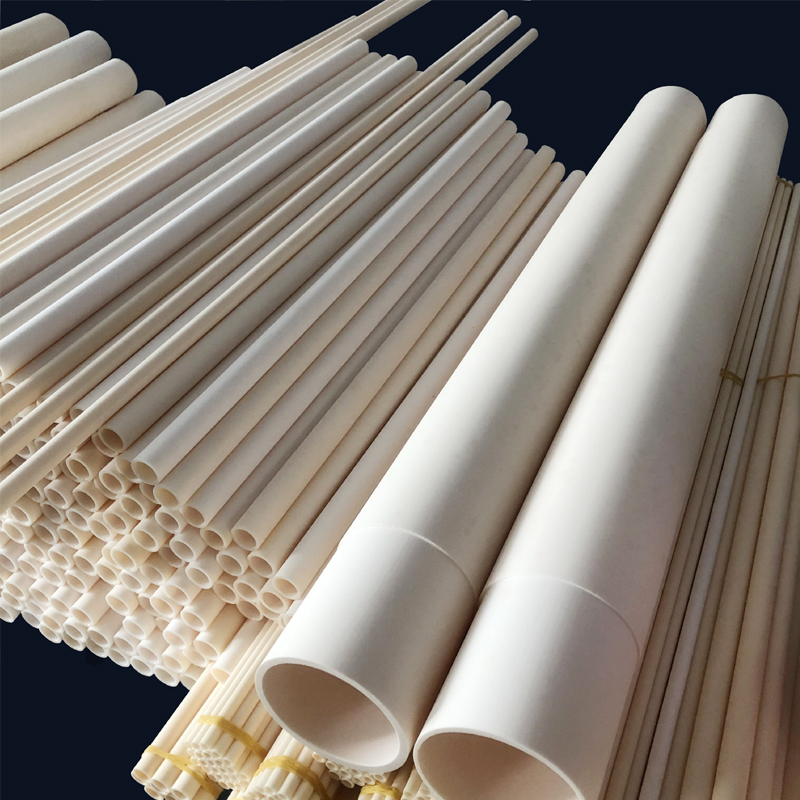
In order to improve the accuracy of the product, some alumina ceramic materials need to be further processed after the sintering process is completed, so as to achieve a higher surface finish. But alumina ceramics is not an ordinary material after all, how can its finishing treatment be better?
Because the hardness of the alumina ceramic material is relatively good, it is necessary to use a harder grinding and polishing tile material to finish it, such as SIC, B4C or diamond , etc., and in the finishing process, the surface of the alumina ceramic material should be improved in advance the lubricity.
In the finishing of alumina ceramic materials, the more commonly used method is to gradually grind from coarse to fine abrasives, and then perform surface polishing. When polishing, you can use Al2O3 powder or diamond paste less than 1μm micron for grinding and polishing. Of course, laser processing And ultrasonic processing can also achieve the purpose of alumina ceramic grinding and polishing.
The above is the finishing treatment to improve the surface finish of the alumina ceramic material, followed by the treatment to enhance the mechanical strength of the alumina ceramic, that is, the alumina ceramic strengthening technology. In fact, advanced technologies such as electron beam vacuum coating, sputtering vacuum coating or chemical weather vapor deposition are used on the surface of alumina ceramics to temper the alumina ceramics.
These methods can coat a layer of silicon compound film on the surface of alumina ceramics, and only need to heat treatment at a temperature of 1200 ℃ ~ 1580 ℃, the alumina ceramics can be tempered. Facts have proved that the mechanical strength of strengthened alumina ceramics can be greatly increased on the original basis, and alumina ceramics with ultra-high strength can be obtained.
Industry experts point out that the core competitiveness of advanced ceramic materials hinges not only on substrate formulations but also on the maturity of post-processing finishing and surface treatment technologies. At present, domestic alumina ceramic processing technologies have gradually moved away from traditional extensive manufacturing models, shifting toward micro-nano precision manufacturing, customized functionalization, and eco-friendly high-efficiency production.In the future, with the deep integration of artificial intelligence, automated processing equipment and innovative modification processes, the machining accuracy, yield rate and production efficiency of alumina ceramics will be further improved. This will accelerate the substitution of imported high-end precision ceramic products, support the independent controllability of industrial chains including high-end manufacturing, semiconductors and new energy sectors in China, and inject sustained momentum into the high-quality development of the advanced materials industry.