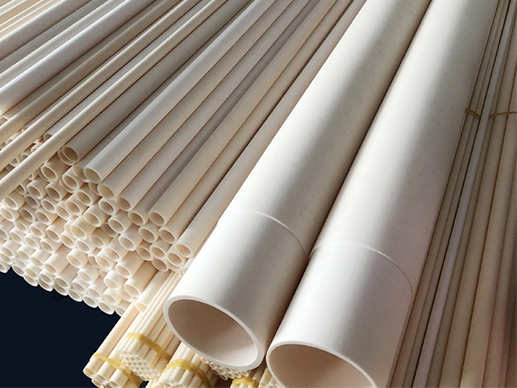
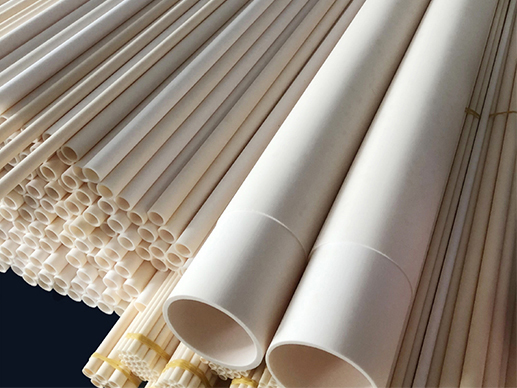
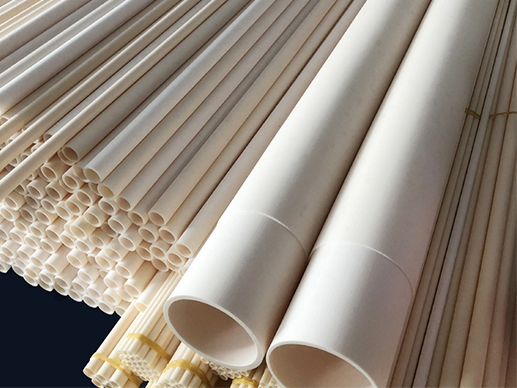
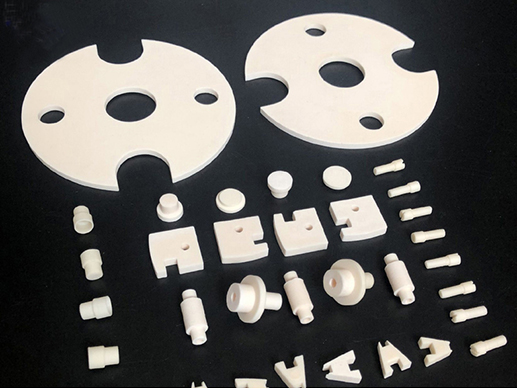
Alumina ceramic tubes, with their unique advantages such as high temperature resistance, strong insulation and high cleanliness, have become an indispensable core supporting component in semiconductor production lines.
Amid the transformation of industrial manufacturing toward high-end and green development, the operational stability of equipment under high-temperature, high-pressure and strong corrosive working conditions has become the key for enterprises to cut costs and boost efficiency.
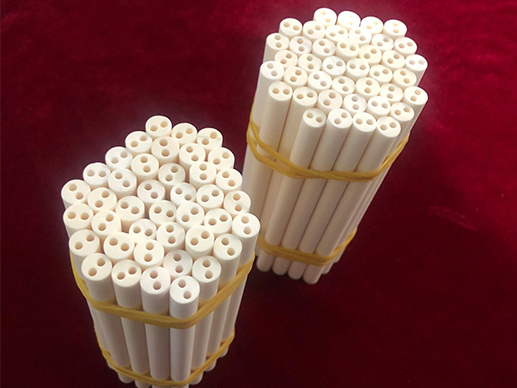
2‑hole alumina ceramic tubes are manufactured from high‑purity alumina (99.3%–99.7%) as the core raw material through precision forming and high‑temperature sintering processes. Featuring open ends and excellent verticality, they can withstand an extreme temperature of up to 1800°C and meet international standards including SGS and DIN series.
As industrial manufacturing transforms toward high-end and precision development, alumina ceramic tubes have become key basic components in chemical engineering, metallurgy, electronics, new energy and other fields, thanks to their core advantages such as high temperature resistance, corrosion resistance, high hardness and excellent electrical insulation.
Outstanding hardness and excellent wear resistance are among the most competitive properties of alumina ceramics. According to tests by the Shanghai Institute of Ceramics, Chinese Academy of Sciences, its Rockwell hardness can reach HRA 80–90, and its Mohs hardness is as high as grade 9, second only to diamond and silicon carbide, far superior to ordinary wear-resistant steel and stainless steel.
Operating Temperature: The wear amount of alumina ceramics is largely dependent on the operating temperature. Alumina ceramics exhibit excellent performance at high temperatures, but prolonged exposure to extreme heat may gradually degrade the material. Adhering to recommended temperature limits helps maximize the lifespan of the product.
As a core branch of the field of inorganic non-metallic materials, alumina ceramics have been deeply integrated into various industrial sectors such as machinery manufacturing, electronics and electric power, metallurgy and chemical engineering, new energy, aerospace, and others, thanks to their unique advantages including high temperature resistance, high hardness, corrosion resistance, and excellent insulation properties.
Alumina ceramics are known as the "teeth of industry". With a Mohs hardness of up to 9, their wear resistance is 266 times that of manganese steel, and they can operate stably for a long time at a high temperature of 1400℃.
As a core category in the field of advanced ceramics, alumina ceramics, with their extraordinary properties far exceeding those of traditional materials, have become a key force driving industrial upgrading and breaking through technical bottlenecks, and are quietly transforming our production, daily life and technological landscape.
As the "king of cost performance" in the field of special ceramics, alumina ceramic parts, with their outstanding properties such as high temperature resistance, excellent insulation, and corrosion and wear resistance, have quietly penetrated into many core sectors of the national economy including new energy, electronics, chemical engineering, and medical treatment.