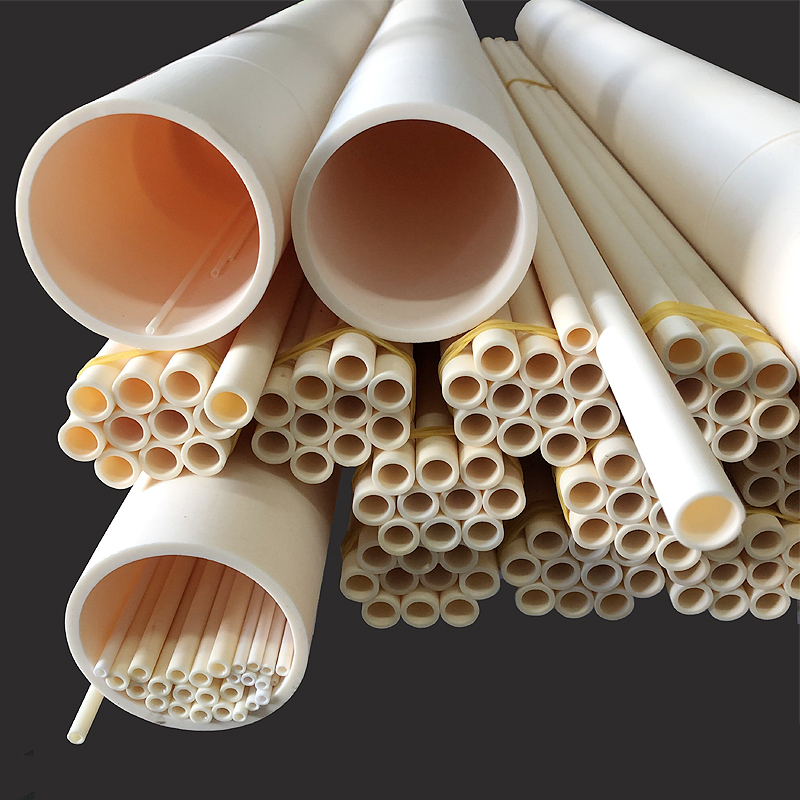
In various electric heating devices, ranging from household electric ovens and electric heating tubes to industrial heating equipment that needs to work continuously at high temperatures, you will find that almost all ceramic resistance rods are made of alumina (Al₂O₃) ceramics, especially high-purity 96% or 99% alumina. This phenomenon is not due to the industry's "habitual use", but because alumina achieves an extremely balanced state in various aspects such as electrical insulation, safety and reliability, high-temperature performance, thermal conductivity, cost, and manufacturing process maturity. As the core material of resistance rods, it can not only withstand high temperatures and effectively insulate electric current, but also has sufficient strength and heat dissipation performance, making it stand out among many ceramic materials.
The overwhelming advantage of alumina as the core material of resistance rods
Electrical insulation and high temperature stability: the most important underlying logic of resistance bars
The role of ceramic resistance rods is to insulate electric current while transferring the heat from the internal resistance wire to the outside. Alumina is an excellent electrical insulator; even at high temperatures (such as above 1000°C), it can effectively isolate the current between the resistance wire and the external metal sleeve or grounding part, preventing electric leakage and short circuits and ensuring safe use. This characteristic has essentially determined its core position.
Moderate thermal conductivity: not the highest, but most suitable for resistance rods
Although the thermal conductivity of alumina is not the highest among all ceramics, its thermal conduction performance falls exactly within an "optimal range". If the thermal conductivity is too poor, the internal heating wire will burn out due to heat accumulation; if it is too strong, it will cause the local temperature to drop too quickly, which is not conducive to overall temperature control.
Alumina’s thermal conductivity of approximately 20–30 W/m·K enables heat to diffuse naturally without causing excessive heat leakage. In addition, although its coefficient of thermal expansion is not entirely the same as that of the metal resistance wire, the spiral structure of the resistance wire can buffer the expansion difference, allowing the entire component to maintain stability during thermal cycles.
Chemical stability and manufacturing advantages: key factors determining large-scale applications
When exposed to water vapor, flue gas, oil stains, and even some industrial atmospheres, alumina exhibits extremely high chemical inertness and is not easily corroded or degraded, thereby extending the service life of resistance rods. From a manufacturing perspective, it is one of the most mature structural ceramics. Every step from powder preparation, granulation, molding to sintering has a large-scale industrial foundation, enabling the efficient production of ceramic tubes of different specifications.
High yield rate, low cost, and stable mass production are themselves a form of competitiveness, making alumina the optimal choice in terms of comprehensive performance and economy.