Modern spectroscopy systems are increasingly adopting alumina-based ceramic structures, as instrument designers seek greater thermal stability, superior chemical resistance, and more reliable long-term calibration performance.
As an indispensable and crucial component in pipeline systems, flanges are mainly used to connect pipes, equipment, valves and other components. They play important roles such as joining pipelines, ensuring the stability of pipeline systems, achieving sealing of pipeline systems, adapting to different working conditions, and facilitating maintenance.
In fact, ferrous materials have long been common wear-resistant options, with manganese steel, white cast iron, and alloy steel being several widely used varieties. However, these materials do come with certain drawbacks. For instance, austenitic manganese steel boasts excellent toughness but is rather difficult to machine.
In modern medical imaging and industrial testing, the X-ray tube is an indispensable core component. The mainstream product today—the Ceramic Envelope X-ray Tube—did not exist from the very beginning; its emergence went through an evolutionary process from glass to ceramic.
In recent years, with the adjustment of national policies, the semiconductor industry has developed rapidly and its industrial scale has expanded drastically. Meanwhile, semiconductor manufacturing equipment has been continuously evolving toward higher precision and greater complexity.
In the wave of industrial upgrading driven by 5G communication, new energy vehicles and high-power semiconductors, alumina ceramic, as a key structural and functional material, has become the focus of attention in many high-end manufacturing fields.
Against the backdrop of the global "dual carbon" strategy and the transformation of the automotive industry towards lightweighting, electrification, and environmental protection, the innovative application of high-performance materials has become the key to enhancing the core competitiveness of automobiles.
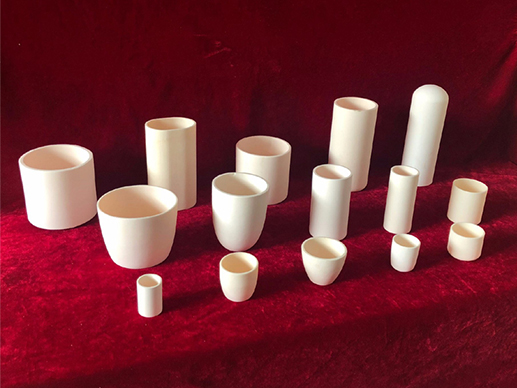
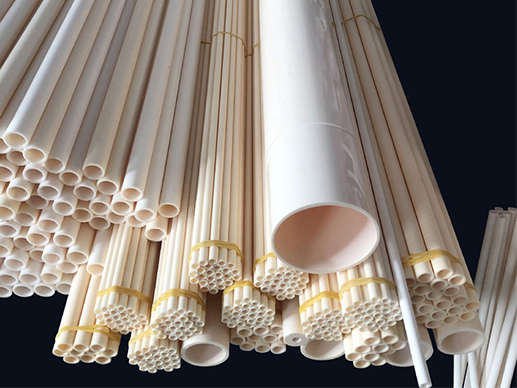
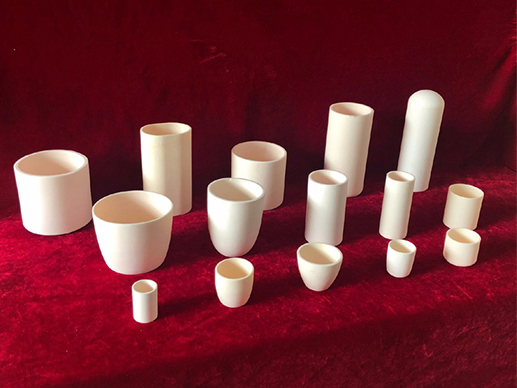
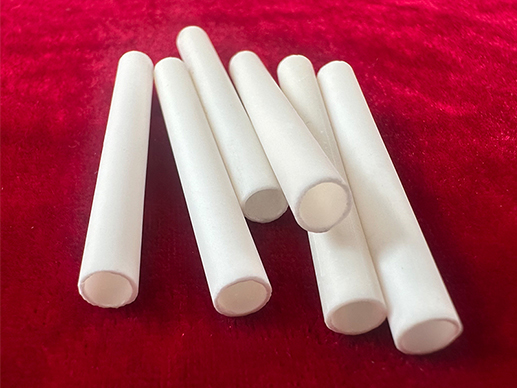
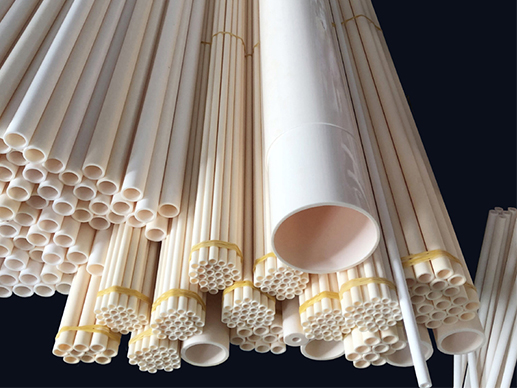
Alumina ceramic tubes are a type of high-performance ceramic material with excellent properties such as high temperature resistance, corrosion resistance and wear resistance, thus being widely used in many fields.
In various electric heating devices, ranging from household electric ovens and electric heating tubes to industrial heating equipment that needs to work continuously at high temperatures, you will find that almost all ceramic resistance rods are made of alumina (Al₂O₃) ceramics, especially high-purity 96% or 99% alumina.
In the vast universe of industrial materials, an ostensibly ordinary ring-shaped object is quietly rewriting the rules of the game. It is not metal, yet harder than metal; not plastic, yet more resistant to high temperatures than plastic; not rubber, yet more corrosion-resistant than rubber. It is the alumina ceramic ring, hailed as the "industrial teeth".